
Is burning fat and burning calories the same? No. This guide explains the key differences between calorie expenditure vs. lipolysis, how to trigger fat burning, and the science-backed strategy to lose weight without sabotaging your metabolism. I often hear this question at the gym, on social media, and even in the kitchen while chatting with friends who are trying to make sense of the intricacies of fitness. Is burning fat and burning calories the same in most people’s minds? We’ve gotten used to thinking of these terms as synonyms. We put on our fitness trackers, look at the number of calories burned, and think, “Great, I just burned a lot of fat.”
But what if I told you that these two processes aren’t the same thing? What’s more, by focusing exclusively on calories, you may be unconsciously sabotaging your goals of losing weight and improving your physique.
Let’s imagine your body as a complex economic system. Calories are the currency, and fat is the gold reserve. Spending currency (calories) and spending the reserve (fat) are different tasks, and they are governed by completely different mechanisms.
In this article, we’ll explore in detail why burning fat and burning calories the same, only at first glance, and how understanding these nuances will help you finally achieve the body you’ve always dreamed of.
Table of Contents
Chapter 1. Basics: What Is a Calorie and What Is Fat?
Before we start debating physiology, let’s get the definitions straight. I like to use simple analogies because the human body isn’t a magical black box, but a surprisingly logical mechanism.
What is a calorie?
Imagine that a calorie is a unit of energy. It’s fuel. When I say “I’m eating,” I’m actually saying, “I’m refueling my engine.” Your body, just like a car, doesn’t run on empty. Energy is needed for your heart to beat, your brain to think, and your muscles to move.
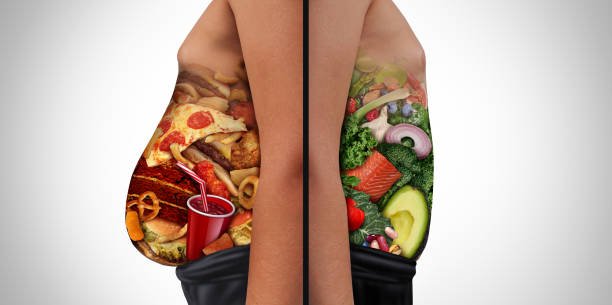
We get energy from three main sources: carbohydrates, proteins, and fats. From an energy standpoint, the body doesn’t distinguish between “good” and “bad” calories. To it, 500 calories from a burger is the same amount of fuel as 500 calories from buckwheat with chicken. The only difference is how this fuel is absorbed and what it’s used for.
When I say burning calories, I mean the process of expending energy. You burn calories when you sleep, when you read this article, and, of course, when you run on a treadmill. Every movement you make has an energy cost.
What is fat?
But fat is not a unit of measurement. It is a form of energy storage. If a calorie is a coin, then fat is a safe where the body stores unused currency for a rainy day.
Evolutionarily speaking, this mechanism saved our lives. Our ancestors didn’t know when the next mammoth cutlet would come along, so nature created the perfect survival system: the body packs excess energy (calories you’ve eaten but not spent) into fat cells (adipocytes).
Fat burning isn’t just about expending energy. It’s the process of mobilizing these reserves. The body must first realize that external food is gone (or insufficient), open the “safe,” retrieve fatty acids from there, deliver them to the muscles, and only then burn them in the mitochondrial furnace.
Thus, burning fat and burning calories the same relate to each other like “spending money from your wallet” and “withdrawing cash from a savings account.” If your wallet is full of cash (energy from the meal you just ate), the body will never go to the bank (to your fat reserves). It’s unprofitable and energy-intensive.
Chapter 2. Debunking the Myth: Why They Are Not the Same Thing
Let’s now clearly distinguish these concepts. Many people go to the gym, see “Calories Burned: 300” on a cardio machine, and think they’ve just burned 300 grams of fat. That’s a trap.
The Difference in Energy Sources
When you burn calories, you burn energy. But where that energy comes from—blood sugar (glycogen) or fat stores—is a big question.
Imagine that your body is a hybrid car. It has two tanks: one with gasoline (carbohydrates/glycogen), the other with electricity (fat). When you step on the gas (do an intense workout), the car uses gasoline because it provides energy quickly. When you’re cruising along the highway (slow walking or light work), the car switches to electricity, conserving gasoline.
The same thing happens with our bodies. Calorie burning happens constantly. But fat burning only kicks in under certain conditions: So why do people confuse these concepts? For decades, fitness industry marketers have been telling us: “More calories burned = more fat lost.” In reality, burning fat and burning calories the same in only one case: if you are in a calorie deficit and your body has already depleted its carbohydrate stores.
- Low intensity. If you’re gasping for air and your heart is pounding like a jackhammer, your body switches to anaerobic (oxygen-free) mode, where carbohydrates serve as fuel. Fat is broken down only in the presence of oxygen.
- Energy deficit. As long as glucose from the candy you ate is circulating in your blood, fat will remain untouched.
A real-life example
Imagine two people. The first goes for a leisurely one-hour walk in the park. He burns 250 calories. The second does a 20-minute intense CrossFit workout, burns 300 calories, and lies in a pool of sweat.
Who burned more fat? Most likely, the first one. Why? The second person used creatine phosphate and glycogen for explosive movements. His body was operating under such stress that it simply didn’t have time for the complex process of lipolysis (fat breakdown). He burned calories, but not fat.
However, don’t rush to throw away your dumbbells. The second person has an important advantage—the afterburn effect (EPOC—excess post-exercise oxygen consumption). After an intense workout, the body continues to burn calories for recovery for another 24–48 hours, and these calories will be drawn from fat as well. For the first person, the afterburn effect is minimal.
Chapter 3. The Mechanism of Lipolysis: How to Get Your Body to Burn Fat
Now that we’ve established that burning fat and burning calories the same go hand in hand but aren’t the same thing, let’s take a closer look at exactly how to control the fat-burning process.
Lipolysis is the biochemical process of breaking down neutral fats into glycerol and fatty acids. It sounds complicated, but in practice, everything follows simple rules.
The Hormonal Key
Imagine that a fat cell is a locked door. To open it and get the fat out, you need a key. That key is hormones. The main fat-burning hormone is insulin. Wait. Did I make a mistake? No, I didn’t. Insulin is the fat storekeeper. As long as insulin levels are high, the door to the fat cell is locked tight.
To open the door, we need other hormones: adrenaline, norepinephrine, growth hormone, and, to some extent, cortisol. The goal of any fat-burning process is to create conditions in which insulin levels drop, and levels of counter-regulatory hormones rise.
How can this be achieved?
- Fasting or intervals between meals. When you don’t eat for 4–6 hours, insulin drops to basal levels, and the body begins to draw on internal reserves.
- Physical activity. Exercise stimulates the release of adrenaline.
- Low-carb diet. Less sugar — less insulin — more access to fat.
The oxygen factor
Remember hybrid cars? Fat burns only in the presence of oxygen. It takes much more oxygen to oxidize a single fatty acid molecule than it does to oxidize glucose.
That’s why “aerobic” exercises (walking, light jogging, swimming at a leisurely pace) are considered direct fat burners. During this type of workout, your body operates at 60–70% of your maximum heart rate (MHR). It’s easy to calculate: 220 – your age multiplied by 0.6–0.7.
If you exceed this threshold, you leave the “fat-burning zone.” It doesn’t mean you stop losing weight. It means that right now, you’ve stopped using fat as fuel. But your overall calorie balance will still determine the outcome.
Chapter 4. A Practical Approach: What Should You Choose to Get Results?
I often see people fixating on the question: “Which is more effective for weight loss?” And here we return to our main dilemma. If you’ve firmly grasped that burning fat and burning calories the same only in the context of an overall deficit, you’ll understand my main point.
For long-term and visible results, we need to combine both approaches. I call this the “two-front strategy.”
Front 1: Low-intensity cardio (Direct fat burning)
This is your foundation. It includes walking, light jogging, and working out on an elliptical at a low heart rate.
Pros: Cons: My advice: Add a morning walk on an empty stomach. This is the ideal time for fat burning because insulin levels are minimal and glycogen stores are depleted overnight. 30–40 minutes of leisurely walking in the morning will kickstart lipolysis.
- Uses fat as the primary fuel during the workout.
- Does not cause severe stress or overtraining.
- Teaches the body to oxidize fatty acids more efficiently.
- Requires a lot of time (40–60 minutes to deplete glycogen and reach fat).
- Low afterburn effect.
- Adaptation: Over time, the body gets used to monotonous exercise and begins to conserve energy.
Front 2: High-Intensity Training (Calorie Deficit and Metabolism)
That includes strength training, HIIT (High-Intensity Interval Training), and sprints.
Pros: Cons: My advice: Don’t try to “kill” yourself with cardio every day. It’s better to do strength training 2–3 times a week to build muscle mass, and on the other days, active recovery (walking).
- Create a massive energy deficit.
- Preserve and build muscle mass. Muscles are the main consumers of energy. The more muscle you have, the more calories you burn at rest.
- They trigger a prolonged recovery process, during which the body will draw energy from fat.
- During the workout itself, fat is hardly burned (glycogen is burned).
- High risk of injury with improper technique.
- Requires more recovery time.
Chapter 5. Nutrition: The Main Regulator of Processes
No matter how hard you train, if you don’t understand the difference between calorie expenditure and fat expenditure, you’ll be treading water. I want you to remember the formula that always works:
Weight loss = Calorie deficit (total energy).
Fat loss = Calorie deficit + Low insulin + Hormonal balance.
You can create a calorie deficit by eating nothing but sugar and protein bars. You’ll lose weight. The scale will show a loss. But you’ll lose muscle, water, and only a little fat. As soon as you return to a normal diet, the fat will come back with a vengeance because your metabolism has slowed down.
To burn fat specifically, rather than muscle, you need to follow a few nutritional principles.
1. Protein is your best friend
Protein performs three important functions in fat burning:
- Thermogenesis: The body spends up to 25–30% of the calories obtained from protein on digesting it. This is free energy expenditure.
- Satiety: It’s hard to overeat protein.
- Muscle preservation: when you’re in a calorie deficit, your body tends to shed energy-consuming muscle. Protein sends a signal: “Don’t touch the muscle, burn fat.”
2. Carbohydrates: insulin management
I’m not a fan of strict keto (completely cutting out carbs) for everyone, because it’s stressful for your mental health and thyroid. But I am a fan of the “carb pendulum.”
If your goal is fat loss, try to eat carbs (grains, fruits) in the first half of the day or around your workout. In the evening, stick to vegetables and protein. That will keep insulin levels low while you sleep, when growth hormone production is at its peak, and fat breakdown is most active.
3. Fats: Don’t Be Afraid, But Keep Them in Check
Do you need to eat fat to burn fat? It sounds like an oxymoron, but it’s true. Healthy fats (Omega-3, olive oil, nuts, avocados) support hormonal balance. Without fats in your diet, the production of testosterone and other lipolytic hormones is disrupted. But remember: fat is the most calorie-dense nutrient (9 kcal per 1 gram), so you need to control your intake.
Chapter 6. Expert Opinions and Scientific Data
I always rely on the evidence base so as not to be just another voice on the internet. Let’s see what the research says about whether burning fat and burning calories the same or, after all, different goals.
A study published in the Journal of Applied Physiology showed that during prolonged low-intensity aerobic exercise, fat accounts for up to 60–70% of total energy expenditure, whereas during high-intensity exercise, it accounts for only 30–40%. At first glance, “slow” cardio wins.
However, another study (in The American Journal of Clinical Nutrition) confirms that total fat loss over 12 weeks was higher in the group that combined strength training with interval training, compared to the group that did only prolonged cardio. Why? Because they burned more total calories by building muscle and boosting their metabolism.
Expert opinion (from me, the expert): You can’t look at a workout in isolation. What matters is what happens to your body during the 23 hours outside the gym. If you burned 500 calories during a workout but then spent the rest of the day sitting around, your NEAT (non-exercise activity thermogenesis) dropped to zero. Your total energy expenditure may end up being lower than that of someone who didn’t work out but walked a lot, did housework, and stayed active.
That’s why I compare the body not just to a car, but to a family budget. You can make a big profit once (intense workout), but if you shut off all the small income streams (NEAT, food thermogenesis, light activity), your overall budget (calorie deficit) won’t grow.
Chapter 7. Common Mistakes
The path to a lean body is littered with pitfalls that almost everyone falls into. By understanding that burning fat and burning calories the same, you can avoid these traps.
Mistake 1. “I’m working on burning fat, so I don’t eat before my workout.”
This is a great strategy for a morning walk, but it is dangerous for strength training. If you go to the gym with heavy weights on an empty stomach, you’ll most likely lack the strength for a quality workout. You’ll start nodding off, and your intensity will drop. As a result, you’ll burn fewer calories than if you’d eaten a banana 40 minutes before your workout. Fat is burned between sets and after your workout, not while you’re lifting weights.
Mistake 2. “Rewarding” yourself after workouts
It’s an age-old story. You exercise for an hour in the gym, spot 500 calories burned in the process, and think that it’s okay to eat something like a doughnut or a hamburger because you’ve earned it. But the issue here is that a hamburger contains anywhere between 800 and 1,000 calories, which means that not only does it negate the calories burned, but also adds extra calories to your body.
Mistake 3. “Survival” workouts
I often see people killing themselves with hour-long cardio sessions at a high heart rate, thinking this is the best way to burn fat quickly. This is a path to overtraining, a surge in cortisol (the stress hormone), and muscle loss. High cortisol causes the body to store fat in the abdominal area, no matter how hard you try. Effective fat burning involves comfortable activity and stress management.
Chapter 8. Creating the “Perfect Body” Strategy
It’s time to combine all this knowledge into a single plan. If you’ve read this far, you already understand that burning fat and burning calories the same, only in the context of energy balance, but not in the context of body composition quality.
Here is my step-by-step strategy that works for 100% of people (provided there are no serious endocrine disorders).
Step 1. Calculate your calorie range
No need to guess. Calculate your basal metabolic rate (BMR) and multiply it by your activity factor. Subtract 10–15% from the resulting number. That’s your fat-burning calorie range. Without this step, all talk about workout types is pointless. If you eat more than you burn, you won’t burn fat, even if you work out for 3 hours a day.
Step 2. Focus on NEAT
Before rushing to the gym, increase your daily activity. 10,000 steps a day burn about 300–400 calories, and these calories come from fat if you walk at a leisurely pace. Parking farther away from the office, taking a walk after dinner, and skipping the elevator are subtle but powerful tools.
Step 3. 2–3 strength training sessions per week
Your goal is to preserve muscle. Muscle is a furnace that burns calories 24/7. If you lose muscle, you’ll have to eat like a bird to avoid gaining weight. Use basic exercises (squats, deadlifts, presses) that engage multiple muscle groups. It will create the maximum metabolic response.
Step 4. Add cardio wisely
Choose one of two options:
- Option A (for joints and beginners): 3–4 times a week for 40–60 minutes of walking in the 60–70% of MHR zone. Ideally, in the morning on an empty stomach or after strength training.
- Option B (for advanced): 1–2 times a week HIIT (intervals: 30 seconds of sprinting, 90 seconds of rest) to boost metabolism and 2–3 times walking for recovery.
Step 5. Sleep and stress
This is an underrated factor. If you sleep less than 7 hours, leptin (the satiety hormone) levels drop, while ghrelin (the hunger hormone) rises. You start eating more. Additionally, lack of sleep increases cortisol. High cortisol during a calorie deficit causes the body to break down muscle and “store” fat on the belly. You can follow a diet and exercise perfectly, but if you don’t sleep, fat burning will stop.
Conclusion: Time to Sum It Up
Let’s return to our main question: Is burning fat and burning calories the same?
Now you know that the answer is no, they are not the same thing.
Calorie burning is the process of energy expenditure. It happens all the time: when you sleep, eat, run a marathon, or sit in an office. It is a quantitative measure of your activity.
Fat burning is a complex process that depends on hormonal balance, insulin levels, oxygen availability, and the depletion of glycogen stores. It is a process that requires specific conditions.
If you focus solely on the number of calories burned on the treadmill, you risk losing precious muscle mass, developing chronic stress, and ultimately ending up with a “skinny fat” body—thin but flabby, with a high body fat percentage.
If you understand how your body works and combine a calorie deficit, aerobic exercise for fat burning, strength training to preserve muscle, and hormone regulation, you will achieve sustainable results. Fat will disappear, muscle definition will emerge, and your energy will increase.
Remember: your body is a smart system. It isn’t fooled by “magic pills” or crash diets. It responds to consistency and understanding. Now that you’re armed with this knowledge, you can look at fitness trackers with a clear head and understand exactly: “Right now I’m burning calories, and right now I’m triggering the fat-burning mechanism.”
Act with awareness, and the results won’t be long in coming.
Want this article to read in pdf later?
Enter your Email Address to get this article in pdf format