

The need to lose body fats is a universal ambition in the contemporary society which is led by beauty and health issues. Nonetheless, the subcutaneous fat loss is not necessarily achieved by the means of intense exercise and diet. It is, in a few instances, a manifestation of genetic conditions of severe, though rare, nature. In this article, we will take a detailed examination of the phenomenon of fat loss from two perspectives: as a pathological condition known as lipodystrophy, and as a conscious goal in fitness. We will explore the causes, mechanisms, risks, and strategies to provide you with the most comprehensive understanding of what subcutaneous fat loss truly entails.
Table of Contents
Lipodystrophy – when the loss of subcutaneous fat becomes a disease
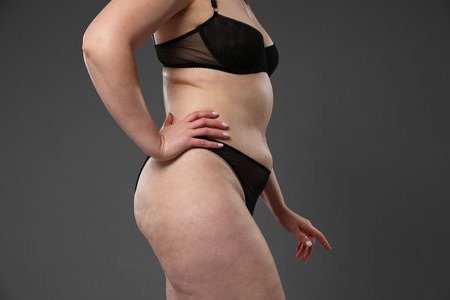
Lipodystrophy is not a single disease, but a whole group of rare disorders characterized by one key feature: complete or partial loss of subcutaneous adipose tissue, as well as its abnormal distribution. This occurs without prior starvation and is not the result of conscious human effort. These conditions are almost always accompanied by severe metabolic disorders, which makes the problem not just cosmetic, but a severe medical pathology.
What is adipose tissue and why can its loss be dangerous?
Before we delve into the details of the disease, it’s essential to understand the function of fat tissue. It’s not just a passive storage place for extra calories. It’s an active endocrine organ that produces hormones (like leptin, which regulates feelings of fullness), helps regulate body temperature, protects internal organs, and serves as the primary energy store. When pathological loss of subcutaneous fat occurs, the entire complex metabolic system is disrupted. Deprived of its main reservoir for storing lipids, the body begins to accumulate fat in atypical places: in the liver, kidneys, heart muscle, and skeletal muscles. This leads to a disruption in the functions of these vital organs and the development of concomitant diseases.
Congenital generalized lipodystrophy (Berardinelli-Seip syndrome)

It is the most severe form of the disorder, which manifests itself from birth. Its incidence is extremely low—approximately 1 case per 10 million people.
Causes and mechanisms of development
The disease is hereditary and is transmitted in an autosomal recessive pattern. This means that a child is born with the pathology only if the child has inherited the defective gene from both parents. Today, there are four main types of congenital generalized lipodystrophy, differing in the affected gene:
• Type 1: Caused by a mutation in the AGPAT2 gene. This gene is responsible for the production of an enzyme that is critical for fat metabolism and the formation of phospholipids in the membranes of fat cells (adipocytes). Its absence makes adipocytes unstable, leading to their atrophy.
• Type 2: It is a mutation of BSCL2 gene, which codes sepin protein. It is a protein that regulates adipocytes development and differentiation. In case of its defect, the differentiation of adipose tissue below the skin in the early developmental stages of a fetus is derailed.
• Type 3: Associated with a mutation in the CAV1 gene, which is responsible for the caveolin-1 protein. It participates in formation of specialized structures on the cell surface known as caveolae that is essential in the absorption of lipids and cell-cell interactions.
• Type 4: The disease is the result of a mutation in the gene PTRF that regulates the production of various proteins, such as caveolin-1. A distinctive feature of this type is that not only adipocytes are affected, but also muscle cells, leading to severe muscle disorders.
Symptoms and clinical picture
The most visible symptom is the almost complete absence of subcutaneous fat throughout the body from birth. Because of this, the muscles appear overly developed, the veins are sharply contoured, and the face looks thin and “skeletal.” However, these are not the only manifestations:
• Metabolic disorders: Due to the inability to store fat in the subcutaneous tissue, triglyceride and cholesterol levels in the blood rise sharply. Carbohydrate metabolism is also disrupted, leading to insulin resistance and the development of type 2 diabetes by the age of 15-20.
• Acanthosis: Dark, hyperpigmented, velvety areas of skin appear in skin folds (neck, armpits).
• Hepatomegaly and liver damage: The liver, forced to take on the role of a fat depot, increases in size. Fatty hepatosis develops, which can progress to steatohepatitis, cirrhosis, and liver failure.
• Cardiological problems: Fat deposition in the heart muscle leads to cardiomyopathy, arrhythmias, heart failure, and a high risk of sudden cardiac death, especially in type 4 disease.
• Other symptoms: Increased appetite, accelerated growth, large hands and feet (acromegaly), and enlargement of the genitals are characteristic. Women may develop hirsutism, polycystic ovary syndrome, and infertility.
Other forms of lipodystrophy

In addition to the congenital generalized form, other types of this disease differ, such as subcutaneous fat loss:
• Genitalized lipodystrophy: The child is born with a normal amount of fat, but during childhood or adolescence, a gradual loss of fat begins in large areas of the body, including the face and limbs.
• Familial partial lipodystrophy: Fat tissue is lost in some areas (chest, abdomen, limbs) and accumulates excessively in others (face, neck), which can create the false impression of an “athletic” physique. Metabolic disorders are also pronounced in this form.
• Acquired partial lipodystrophy (Baracker-Simons syndrome): Characterized by progressive loss of subcutaneous fat in the upper body (face, arms, chest) while maintaining or accumulating excess fat in the lower body (thighs, buttocks).
• Localized lipodystrophy: Most often associated with injections of medications, such as insulin. Lumps, pits, or areas of fat tissue atrophy appear at the injection sites.
Diagnosis and treatment
The diagnosis of lipodystrophy is complex and includes examination, study of family history, genetic testing, and several laboratory and instrumental studies (tests for lipids, glucose, ultrasound of the liver and heart, ECG).
Regrettably, it has no particular treatment. Treatment is aimed at reducing symptoms and eliminating complications. It includes:
1. Very strict life long diet, low fat content.
2. Symptomatic pharmacotherapy: hypoglycemic medications, hepatoprotectors, lipid-lowering medications (however, they do not often work), and arrhythmia treatment.
3. Leptin replacement therapy, as this hormone is not synthesized in the lack of fat tissue.
4. Psychological support and, in some cases, plastic surgery to correct appearance.
The prognosis depends on the degree of involvement of the internal organs. The greatest dangers are liver failure, cardiac complications, and end-stage renal failure.
Conscious loss of subcutaneous fat: the fitness approach

Now let’s move on to a situation where losing subcutaneous fat is a conscious and desired goal. Unlike lipodystrophy, we’re talking about a healthy body here, and the goal is to reduce the amount of fat tissue while preserving or even increasing muscle mass as much as possible.
Basic principle: energy balance
The basic rule of weight loss and fat burning is the concept of energy balance. The burning of fat requires the creation of a calorie deficit: more energy is used, which is more than consumed in food. This can be done in two ways, lowering the amount of calories you consume or raising the amount of physical exercise you do. The combination of the two is the best solution.
It is essential to recognize that the body can lose weight through three primary components: water, muscle, and fat. Rapid weight loss on strict diets often occurs at the expense of water and muscle mass, while the percentage of fat remains high. This leads to the “skinny fat” effect—a person is thin, but their body is flabby and lacking in definition. Our goal is to reduce the fat layer.
Nutrition strategy for fat burning
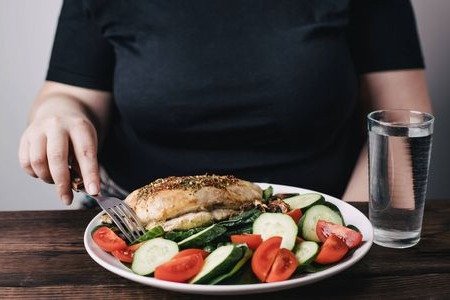
Nutrition is 70 to 80 percent of the success in losing weight while preserving muscle.
• Adequate protein intake: Protein is the primary building block for muscles. When calories are limited, a sufficient intake of protein (1.6 to 2.2 grams per kilogram of body weight) signals the body to preserve muscle tissue. Sources: chicken, turkey, fish, seafood, lean red meat, eggs, cottage cheese, legumes, tofu.
• Carbohydrate control: Carbohydrates are the primary source of energy. They do not need to be eliminated, but it is essential to focus on complex carbohydrates (such as cereals, whole-grain bread, and vegetables) and consume them in the first half of the day when activity is higher. In the evening, their amount can be reduced to prevent an excess of unused energy.
• Consumption of vegetables and fruits: They are rich in fiber, vitamins, and minerals. Fiber helps with satiety and improves digestion. We recommend consuming at least 500g of vegetables and 250-300g of fruit per day.
• Moderate calorie deficit: Weight loss of 0.5-1 kg per week is considered healthy and sustainable. More drastic weight loss will signal to the body that it is “starving,” and it will begin to conserve energy, including slowing down the metabolism and actively breaking down muscle.
Training strategy for burning fat

The right training plan is a combination of strength and cardio exercises.
• Strength training: This is the cornerstone of muscle preservation. When you work with weights (dumbbells, barbells, exercise machines), you give your body a powerful stimulus to preserve muscle mass. When there is a calorie deficit, the nervous system receives a signal: “These muscles are necessary for survival; they must not be touched.” Consequently, the body will be forced to break down fat reserves more actively to obtain energy. It is recommended to participate in 2-3 strength training sessions per week, each lasting up to 60 minutes.
• Cardio training: Its role is to increase daily calorie intake and create that very deficit. Cardio enhances the state of the cardiovascular system and helps in burning up fats. The best program is 3-4 cardio sessions weekly, with each session taking 40-50 minutes at a moderate exercise level (you can talk without becoming breathless). Running, bicycling, elliptical training and swimming are good alternatives.
• Interval training (HIIT): It is the alternation of brief, maximal intensity exercises with the low-intensity recovery. Such workouts are highly effective for burning fat, as they increase your metabolism for several hours after the session. However, they require good physical fitness.
Important details
- • Recovery: Muscles grow and recover during rest, not during training. Ill-considered daily training without adequate rest days will lead to overtraining and slow down progress. You need to sleep 7-9 hours a day.
• Water: Adequate water intake is critical for all metabolic processes, including fat dissolving.
• “Hungry” workouts: Training on an empty stomach does not provide significant fat-burning benefits. Moreover, strength training on an empty stomach can lead to dizziness and loss of effectiveness due to low blood sugar levels.
• Hormonal health: If, despite all your efforts (calorie deficit, exercise), you are not losing weight, it is worth checking your hormonal status. Problems with the thyroid gland, insulin resistance, and other disorders can block the weight loss process.
Conclusion
The loss of subcutaneous fat is a complex and multifaceted process. On the one hand, it can be a symptom of a severe genetic disorder called lipodystrophy, which requires serious medical supervision and treatment. On the other hand, it can be a conscious goal that can be achieved through a balanced diet, proper exercise, and a healthy lifestyle.
The key difference between these two focuses is control and consequences. In the case of lipodystrophy, fat loss is uncontrollable and total, resulting in systemic failures throughout the body. In fitness, we strive for a controlled and gradual reduction in body fat that promotes health, improves body composition, and enhances overall quality of life.
Whatever your goal, remember: the main principle is a sensible and conscious approach. Before taking radical steps, ensure you are in good physical and mental health. If in doubt, always consult specialists—doctors, nutritionists, and qualified trainers.
Want this article to read in pdf later?
Enter your Email Address to get this article in pdf format