

Stuck in the debate of low carb vs moderate carb for weight loss? Discover which approach fits your lifestyle, hormones, and psychology—without the diet hype or guilt.
When it comes to weight loss, especially if you’ve ever read forums or Instagram feeds, you can’t shake the feeling that you’ve been swept up in a tsunami of “for” and “against” arguments. It’s practically impossible to come out unscathed. One thing is banned, then another is rehabilitated. Just a moment ago, some experts were scaring us with sugar and bread (I recall all that hysteria about a metaphorical layer of poison on every loaf), while others are already reminding us: remember, without carbs, the brain simply has nowhere to get energy—performance drops instantly.
The topic of “low-carb vs. moderate-carb diets” consistently tops the list of eternal online battles. And here, I propose not to play the role of a judge who will pass sentence on yet another macronutrient, but rather that of a guide and storyteller: together, we’ll figure out what’s behind each approach, who actually benefits from cutting carbs (and for whom it’s just a source of stress), and how to tell if this is the right strategy for you—so you don’t end up quitting in the third week, feeling guilty and with a bread freshener in your cupboard.
Let’s skip the boring jargon and pseudoscientific “citation wars”—but let’s still take an honest look at how these diets work in practice, where promises of “lose 5 kg by Monday” crumble to dust when hormones and psychology take over. So get comfortable; it’ll be no-nonsense, but to the point.
Table of Contents
What’s Going On Inside Us: A Quick Primer

Before diving into a comparative analysis, let’s play with our imagination a bit. Imagine your body as a smart and finicky home heating system—it’s not just a simple on-off switch: what matters here is what you put in the furnace and when.
Carbohydrates are like light kindling or even scraps of newspaper. As soon as you toss them in the stove, the heat kicks in: the kitchen becomes cozy in a matter of minutes. But turn around for a moment—and it’s all burned out. Great for a quick fix, but if you’re counting on a long evening by the fireplace, you’ll have to dash to the woodpile every half hour.
Fats, on the other hand, are like massive oak logs. They’re harder to get going, but they hold the heat for a long time, evenly and without fluctuations. Light the fire in the evening—it’ll still be warm in the morning.
When a person “goes” on a low-carb diet, it’s as if they’re deciding: okay, starting today, we’re running solely on these oak logs. We sweep the kindling out of the firebox, let the boiler learn to manage like an adult—energy now comes from fat reserves (that very invisible woodpile around the waist). The body doesn’t immediately catch on and takes a couple of days to get used to switching to new patterns—this transition is called ketosis.
There’s a gentler option: a moderate-carb diet. Here, we don’t experiment with completely overhauling the furnace; we keep tossing in a few chips as needed. The main thing is to make sure there aren’t too many (so you don’t accidentally start a fire in the form of extra pounds), but also not to end up sitting drearily by a cold stove.
Truth be told, both of these methods can work perfectly well—it all comes down to your specific “home,” its layout, and your habits. Some people prefer a stronger heat (quick energy), while others prefer steady warmth all night without the hassle. Your task is precisely to figure out: what does your body want? Only then will your choice be an informed one and yield the results you’re hoping for (without unexpected “leaks” in your own system).
Chapter 1: The Low-Carb Diet — The Path to Ketosis
When we talk about a low-carb diet versus a moderate-carb diet for weight loss, the first thing that comes to mind is keto, Atkins, or the strictest version of LCHF (Low Carb High Fat). Here, we strictly limit carbohydrates. Usually, 20–50 grams per day. For comparison, a single medium banana contains about 24 grams of carbohydrates. You get the idea.
How It Works
As soon as you cut your carbohydrate intake down to almost zero, something interesting happens to your body. It’s as if it goes on high alert and starts looking for an alternative route—like a person who suddenly finds themselves in an unfamiliar neighborhood without their usual commute to work. Where to get energy? Okay, let’s pull out the second key: fats.
This is where our biochemical power plant—the liver—comes into play. It literally starts converting fatty acids into small, special molecules—ketone bodies. It’s like a reserve fuel pack for cells: if there’s no glucose, the brain and muscles switch to a “ketone diet” and keep working smoothly.
I like to think of it this way: imagine a hybrid car that has run out of gas. But that doesn’t mean the trip is over! You just press a button—and the car switches to electric power. The engine runs differently, but you’re still going about your business—you’re just using a different energy source. Our body switches over in much the same way when in strict carbohydrate-restricted mode—it simply pulls a new trick out of its sleeve.
Benefits You’ll Feel Right Away
- Your appetite disappears. Honestly, this is one of the most unexpected “features” of a low-carb diet—the sudden quiet in your stomach. When insulin stops bouncing up and down like a kid on a trampoline (and it’s insulin that triggers hunger), those frantic trips to the fridge during the workday simply vanish. Fat and protein aren’t just a half-hour burst of joy; they satisfy you deeply and for a long time. At some point, you even catch yourself forgetting to eat—whether because the day is interesting or because you’re truly full.
- An immediate effect right from the start. The first week usually feels like a mini-miracle: the weight drops noticeably and quickly—though, admittedly, it’s mostly water. The thing is, it’s carbohydrates that cause the body to retain excess fluid (every gram of glycogen drags a decent amount of water along with it), and when there are fewer of them—goodbye, swelling! That new number on the scale is a great pick-me-up and motivates you not to slip back.
- Your mind clears up. I’ve heard this story countless times: as soon as someone gets into ketosis or cuts back on sugar, that foggy feeling in their head seems to take a vacation. Ketones become fuel for the brain instead of the standard “carb-based diesel,” and many people really notice that their thinking becomes clearer and their concentration improves. An example? Suddenly, it feels surprisingly easy to solve problems that used to cause internal frustration with their complexity.
The Dark Side of the Coin
To be honest, I don’t want to create the illusion that switching to a low-carb diet is one long celebration with fireworks. In reality, the path can be quite bumpy in places.
First, there’s that infamous keto flu: this is when many people ask themselves, “Why did I get myself into this?” During the first week, your body might go into “angry teenager” mode—you’ve abruptly taken away its usual carbs (its favorite quick calories), so it starts to rebel. Fatigue hits so hard that by evening, you feel like you’ve just flown across three time zones, you’re irritable like you’ve been starving for three days, your head feels heavy… In short, withdrawal symptoms—and yes, they’re real.
Now imagine an evening with friends or a trip to a new café. They give you the menu, and suddenly you become a person with an uncanny ability to detect sugar: “Is the sauce really devoid of any starch?” “Can I have some broccoli instead of those potatoes?” Basically, your social life becomes a bit more planned. It’s not everybody who wants to talk about why eating a piece of white bread destroys their entire philosophy.
And the third part of this “fun” quest is that your digestive system sometimes reacts in a not-so-diplomatic way. When your diet suddenly becomes fatter than before, your stomach and intestines can get nervous: sometimes, too frequent trips to the bathroom (diarrhea), other times, the complete opposite (constipation). And if your gallbladder wasn’t exactly a Cinderella before, it might not like this sudden change at all now.
In short, switching to a low-carb diet rarely goes unnoticed. It’s like changing your operating system: at first, everything is annoying and seems inconvenient, but then you get the chance to experience a completely different way your body functions.
Who is it for?
A low-carb diet is a real lifesaver for those with insulin issues: prediabetes, high blood sugar, or that very “belly fat.” It’s not just about appearance, but about how your body functions from the inside. Here’s a good example: if you start feeling sleepy and your energy drops after eating a piece of chocolate or a bun, it’s not just about the carbs, but the fact that your body chronically struggles to process them. It’s tired of riding the sugar and insulin roller coaster! In this situation, a low-carb diet isn’t just a fad, but a path to feeling normal—sometimes it’s literally a lifesaver for your pancreas. In short, if you’re craving sweets so badly you’re shaking, and your waistline keeps getting wider, it’s worth at least trying to adjust your diet. For many, this actually works better than any willpower-based effort to stick to a diet “on willpower alone.”
Chapter 2: The Moderate-Carb Diet — The Art of Balance
A moderate-carb diet is a pretty flexible thing—it’s not about strict rules, but rather about a sensible balance. The idea here is to keep your daily intake within 100–200 grams of carbs (yes, that’s still significantly less than the national average!). But instead of eating everything in sight—from croissants to sugary soda—you choose the foods that actually work for you. For example, sugar and white bread are out (they’re like guests at a party: they look great for the first 10 minutes, but after that, they just get in the way), and things like oatmeal, buckwheat, beans, or cherries with apples take their place.
The advantage of this approach is its simplicity and flexibility. You don’t feel like a hostage to yet another restriction, and you’re not raiding the fridge at night for a piece of chocolate. It’s closer to common sense: you still eat fruit for breakfast and porridge for lunch, but your energy levels are more stable, and blood sugar spikes become a rarity. It’s as if you’ve found that happy medium between “no sweets at all” and “living on pasta all week”.
How it works
The idea here isn’t to completely shut down our body’s “gasoline engine,” but rather to retrain it to work more efficiently—without wasting fuel. Think of the diet not as a strict ban on an entire food group, but as a smart adjustment to the fuel system: we aim to maintain a slight calorie deficit and focus not just on carbohydrates in general, but on their type, choosing those that digest slowly.
Instead of fast carbs—those very sugars and white bread that flare up instantly, like gasoline in a fire—we prefer complex ones. These are foods like whole grains or legumes: they’re like sturdy logs in a fireplace. Throw them into the fire, and you get a steady, even flame, without sudden spikes in heat or, conversely, the fire dying out. Energy is released gradually, you stay full longer, and you’re less likely to get caught up in snacking between meals. That’s the whole logic—no magic of restrictions, just a slightly more thoughtful choice of fuel for your body.
The Benefits of Flexibility
- We could talk about flexibility in nutrition for a long time—but if we boil it down, it all revolves around three major advantages.
- First—psychological resilience. Imagine: no panic over a sudden corporate dinner or family get-together. If I wanted an apple—I ate an apple; you end up at a birthday party—and even a slice of pizza doesn’t feel like a disaster. That strict inner “under no circumstances!” voice stops echoing in your head, and life becomes easier. You can truly enjoy your food (and the moments), rather than sitting in constant fear over every crumb.
- The second benefit is noticed by everyone who occasionally goes beyond the limits of calm yoga or walking. If you love a 5-kilometer run, jumping onto a box, or lifting a barbell, without a normal amount of carbohydrates, your energy will simply abandon you at the worst possible moment. Glycogen for your muscles is like gasoline for a car; you can’t run a 100-meter dash on an empty tank. A flexible approach is exactly what saves the day here: workouts become more intense, and the results are more noticeable.
- And the third point—variety! Seriously, try getting your daily intake of fruits and vegetables on a low-carb diet, let alone meeting your fiber and vitamin needs… It’s a real quest with elements of despair. But here, you can calmly eat a bowl of berries, crunch on a juicy carrot, or add quinoa to your salad without counting every gram of carbs on a calculator. And the bonus—a healthy microbiome will be grateful to you.
Caution: pitfalls
But this system has its “buts” too.
With a moderate-carb diet, you can’t ignore the details—you won’t be able to let your guard down. While on a low-carb diet, you can, roughly speaking, load up on bacon and keep losing weight (the body reacts differently to fat there). Here, it’s important to keep a close eye on calories.
Overdo it just a little with pasta or bread—and suddenly the scale doesn’t show that long-awaited drop; instead, your body eagerly stores energy “for later,” just in case. Even with the healthiest whole-grain pastas—just one extra scoop, and that’s it.
- One more thing: this path isn’t for sprinters. Don’t expect rapid weight loss—the numbers will drop slowly, and at times it’ll feel like they’ve stalled completely (hello, plateau!). Emotionally, this can be discouraging: you just want to see a dramatic change and think “Well, I’m doing great!”, but then you have to convince yourself to be patient.
- And here’s another pitfall that often catches up with many people I’ve met: if you mix carbs haphazardly—for example, grabbing a cookie with tea instead of lunch or skipping the veggies with your chicken—your blood sugar will spike and crash. And that’s when that burning hunger returns—even though you just ate, you want to eat again right now. It’s very much like a “roller coaster” that’s very hard to get off of.
Who is this for?
The moderate-carb diet—the choice for active people. If you walk a lot, exercise 3–4 times a week, have no serious carbohydrate metabolism issues, and don’t like strict restrictions, this is the diet for you. It’s a lifestyle that’s easier to incorporate into your daily life.
Chapter 3: Comparative Analysis—What Do the Numbers Say?
Let’s get to the point. If we look at low carb vs moderate carb for weight loss strictly from a scientific perspective, what do we see?
If we review the results of major meta-analyses (such as those published in The American Journal of Clinical Nutrition), a rather intriguing picture emerges. Right at the start—that is, somewhere in the first 3–6 months—people on low-carb diets do lose weight faster than others. It’s as if the “cut out all carbs” approach immediately provides a noticeable boost. But if we look further, over the actual long haul of a year or two, the lead disappears: the difference vanishes, and both groups lose weight at roughly the same rate.
Here, a less obvious point emerges: it’s not the type of diet that wins. What wins is the ability to stick to the chosen plan—whatever it may be.
Take, for example, the work of Stanford professor Christopher Gardner (the famous DIETFITS project). His research has shown quite convincingly that success depends almost entirely on your genes or insulin sensitivity.
Something else is far more important: will you be able to “stick with” your eating plan for at least a couple of years? That’s where the real battle lies.
To illustrate, imagine a cross-country trip—say, from New York to Los Angeles.
A low-carb diet is like a highway with no traffic jams, but the rules are too strict: one wrong move, an apple that’s too sweet, or an extra slice of bread, and a penalty is almost guaranteed. The ride is fast, but a little nerve-wracking: you’re afraid of breaking the rules and getting off track.
But a moderate-carb diet is a different road altogether. It’s longer, and you’ll occasionally hit traffic jams along the way (that “weight plateau”), but you can afford to stop for a snack or stretch your legs. The pace is unhurried, but you drive without panic and with a little more enjoyment of the process.
Both options will lead you to the finish line—it’s just important to understand yourself: which approach makes it easier for you to stay on course?
Chapter 4: Practical Tips — How to Make the Right Choice
Please close this article for a moment and honestly answer three questions for yourself. Your answer to the question “low carb vs moderate carb for weight loss” depends entirely on these answers.
Question 1: How do you feel about restrictions?
Suppose you’re the kind of person who, upon hearing the word “no,” immediately wants to try that “no,” a low-carb diet will break you in two weeks. If you like clear rules and boundaries, you’ll feel comfortable on keto.
Question 2: What is your level of physical activity?
If you’re an “office drone” who moves from chair to car and from car to couch, you don’t need high-carb foods. You simply won’t burn them off. For you, a low-carb diet makes physiological sense.
If you’re an active person who runs, swims, or goes to the gym for the joy of it, not just to check a box, a moderate amount of carbs will support your muscles and hormonal balance. Cutting out carbs during high-intensity workouts leads to catabolism (muscle breakdown) and injuries.
Question 3: Do you have any eating disorders?
If you have a history of overeating, strict diets with restrictions are a trigger. A low-carb diet can lead to a breakdown where you think, “It’s all over, I’m going to eat everything in sight.” In that case, it’s better to choose a moderate approach that teaches you to be friends with food, not at war with it.
Chapter 5: Expert Opinions and Pitfalls
I’ve spoken with many nutritionists and endocrinologists, and there’s a strong consensus among them.
Dr. Michael Greger (a proponent of plant-based diets) often criticizes low-carb diets for excluding legumes and whole grains, which are linked to longevity.
Dr. Ken Berry (a proponent of the keto diet) cites thousands of patient stories of people who cured their type 2 diabetes specifically through strict carbohydrate restriction.
Who is right? Both. But there is a nuance that the gurus keep quiet about.
The Danger of Extremes
It’s funny—mention a low-carb diet to anyone, and you’ll immediately hear: “Oh, so now I can stuff myself with bacon and lard until I burst!” Well, that’s kind of like viewing the debate as “all or nothing,” when the real issue is always more complex. In reality, take a closer look: if your “low-carb” approach boils down to a selection of fatty meat delicacies and a complete disregard for fresh vegetables (“they have carbs too!”), The result is nothing like what you dreamed of.
At best, your gut will start sabotaging your plans with constipation, and your blood test might “delight” you with elevated bad cholesterol (LDL).
That’s why all high-quality low-carb approaches emphasize leafy greens (like spinach and arugula) and healthy fats from avocados and olive oil. Imagine a plate: it’s not a dull, meat-colored mess, but a colorful, crisp spread with light, nutty notes.
Now let’s debunk a myth on the other side of the fence. The phrase “moderate-carb diet” is often followed by… well, basically starvation on bread: cutting out everything in sight or mechanically replacing dinner with something like smaller pastries. But if the average diet consists of a mountain of white-flour pasta plus sweet pastries with coffee, your body is unlikely to thank you (and certainly won’t feel any better).
The story here is the same: it’s not about the quantity but the quality of the carbs themselves. When you choose whole-grain products, legumes, or at least buckwheat instead of a loaf of bread—that’s when you have a chance to notice a difference in how you feel: your energy lasts longer, your mood stabilizes… And no late-night raids on the fridge!
Chapter 6: How I Suggest Building a Strategy
You know, I don’t really believe in rigid labels like “I’m strictly low-carb” or “I’m a proponent of moderation.” After all, we’re not robots who can choose a strict diet once and for all. I have a hybrid approach to this—I call it the “Carb Swing.” Why? Because life is too colorful to be forced into black-and-white schemes.
Here’s how it works:
– Start with the minimum (2–4 weeks).
First, we cut out almost all carbs: we leave 50–70 grams a day. That means “goodbye” to sugar, bread, grains, and fruit—all the way to the archives. What does this start give you? First, excess water noticeably disappears (friends say later, “Wow, you’ve slimmed down!”). Second, your brain finally stops craving sweets every hour—you start to feel freer. And if previous tests hinted at insulin resistance, now is your chance to turn things around. Now, here’s the most interesting part: pay attention to how your body responds to this new reality. For some, it goes perfectly—energy surges without appetite spikes or a foggy head. For others, it doesn’t: fatigue, melancholy… In short, it’s a sign to take a step back and rethink your strategy.
– Add “refeed days” — carb days
If a low-carb diet really is your choice, that doesn’t mean you have to stick to it year-round without a break. Make it a habit: once or twice a week, allow yourself a little more carbs (up to 150–200 g). It’s like a mini-celebration for your thyroid and nervous system (this is exactly where your systems start to break down under constant, strict restriction!). In everyday life, these days help prevent binge eating and bring you back to a sense of balance.
– Setting a Compromise Option
But sometimes it goes like this: the strict option clearly doesn’t feel right for you. In that case, the “baseline” comes into play: stick to somewhere between 100–150 grams of good carbs—not sugar from pastries, but buckwheat or rice.
— For breakfast, try to eat protein with fats (otherwise, your morning might start not with energy, but with a sharp spike in blood sugar).
— Got a workout or exercise session? Now’s the perfect time to add a little bit of fast-acting or complex carbs! Your body will immediately send them where they’re needed—your muscles will absorb the glucose almost entirely.
— In the evening, it’s best to stick to protein and vegetables again. Carbs at night can interfere with your body’s production of growth hormone and prevent you from getting that deep, restful sleep that every office worker dreams of by the end of the week.
Why is all this important? Because our body loves to balance things out, shifting from one extreme to the other, it senses these nuances better than any trendy fitness gadget. Listen to it—sometimes it will tell you everything better than any chart from a diet manual.
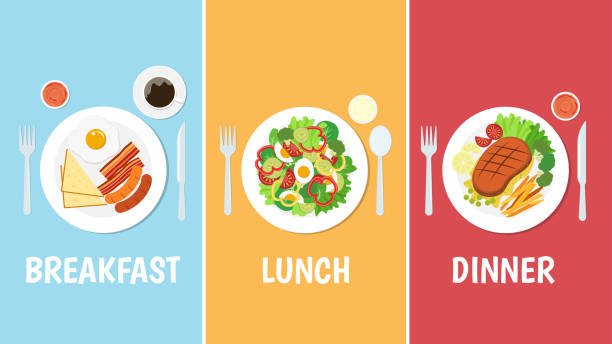
Chapter 7: Real-Life Examples — What It Looks Like on a Plate
To finally clarify the low carb vs moderate carb for weight loss, let’s look at a real menu.
Sample Day on a Low-Carb Diet (up to 50 g of carbs)
- Breakfast: A 3-egg omelet with mushrooms and spinach, cooked in coconut oil. Coffee with cream.
- Lunch: A salad with tuna, lettuce, cucumber, olives, and feta cheese, dressed with olive oil.
- Snack: A handful of almonds or celery with cream cheese.
- Dinner: Grilled salmon, asparagus in butter, and avocado.
*See? Lots of fat, not much volume. You’ll feel full for 4–5 hours.*
Example of a day on a moderate-carb diet (up to 150 g of carbs)
- Breakfast: Oatmeal cooked in water with berries and a spoonful of nut butter + two hard-boiled eggs.
- Lunch: Grilled chicken breast, a serving of buckwheat (120 g cooked), and a huge serving of stewed vegetables (zucchini, bell peppers, carrots).
- Snack: An apple or cottage cheese with berries.
- Dinner: Turkey steak with a tomato and cucumber salad, dressed with lemon juice.
See? There’s plenty of food, and it’s varied, but if you overdo it with the buckwheat or oatmeal, the weight loss process will slow down.
Conclusion: Battle Results
Well, we’ve really dug deep—just like a real gastroenterologist-archaeologist! We discussed the mechanics of both diets, the pros and pitfalls of each, and even sketched out the menus. And now for the most important question: is there an absolute winner in the “low-carb vs. moderate-carb” battle? As is always the life case, there’s no clear-cut answer here, but I can tell you one thing for sure.
First, forget about the idea of a magic weight-loss button. There’s no one-size-fits-all solution—what works for one person might be completely different for another. The best results come from those who know how to listen to their bodies without fanaticism or drama.
A couple of points to help guide you:
— If you have metabolic issues (like prediabetes or higher-than-normal insulin levels), a low-carb diet can be a great way to kickstart changes.
— Can’t stand feeling hungry? Here, too, a low-carb diet often wins out: you stay full longer, have fewer “hunger tantrums,” and find it easier to stay in control.
— If you’re ready to get creative in the kitchen and aren’t afraid of the well-known monotony, there’s a sea of low-carb options for every taste.
— Need to shed a couple of pounds “by yesterday”—for a vacation or an event? Again, low-carb often helps you lose weight faster.
But if you love sports and literally live for your workouts, you’ll likely feel exhausted if you cut out even moderate amounts of carbs. Plus, social life: dining out with friends or family gatherings are easier to fit into a diet with moderate carbs. And this approach is also ideal for those who aren’t in a rush and are willing to wait for gradual changes instead of a sudden start and burnout. And if you’re dreaming not only of losing weight but also of building muscle mass—alongside fat burning—moderate carbs will support you best here.
If you ask me what actually works for most of my friends and clients, I’ll answer simply: don’t go to extremes. Usually, the healthiest (and most energetic!) people are those who flexibly apply the principles of both systems—that is, they start by cutting back on carbs (to “reset their receptors” and curb sugar cravings), and then gradually reintroduce complex carbs as their activity levels increase or their weight stabilizes.
The key is to be honest with yourself about how you feel: Do you have energy? Is your mood okay? Have the cravings stopped? Keep track of this simple food and wellness journal for at least a month or two—that way, you’ll truly understand what works for you.
Remember: your body is unique (yours and yours alone!). What made a Hollywood star look slim on the red carpet might push your body into an “energy deficit.” Find your own formula!
And I’m really curious: where do you stand right now? Are you getting a kick out of cutting carbs, or have you opted for a compromise? Share your story in the comments—let’s swap experiences!
Want this article to read in pdf later?
Enter your Email Address to get this article in pdf format