

Discover an effective evening routine to support weight loss with science-backed slimming rituals from sunset to sunrise. Learn how digital sunsets, optimal dinner timing, and sleep environment hacks boost metabolism and fat burning while you rest. Have you ever noticed how much can change in the few hours between dinner and bedtime? We’re used to thinking that the main battle for a healthy figure takes place during the day—at the gym or over a plate of food. But the truth is that evening routines that promote weight loss often play an even more important role than morning exercise.
I ignored this fact for a long time myself. My evenings followed a standard pattern: a late dinner in front of the TV, scrolling through social media in bed, and hoping my body would “figure it out on its own.” Spoiler alert: it didn’t. Finally, after making some changes in my activities at night, the pointer on the weighing scale started moving. In this article, we’re not going to discuss dieting. I will demonstrate how you can convert your nighttime habits into a useful weapon for increasing your metabolism and fat burning.
Let’s dive into how to create the perfect evening routine that works for your body while you sleep.
Table of Contents
Why Evening Is a Turning Point for Your Metabolism

To understand why evening routines that promote weight loss are so effective, we need to look at biology. Our body isn’t a mechanical engine running on a strict schedule. It’s a complex biochemical laboratory governed by circadian rhythms.
Imagine that your metabolism is a campfire. In the morning, you throw wood on it (breakfast); during the day, it burns brightly (activity and lunch); and by evening, as nature intended, it should slowly burn out, shifting into a smoldering state so you can fall asleep. However, modern life demands that the fire burn until midnight. We eat late, sit in front of blue-light screens, and get stressed out. As a result, the hormonal system goes haywire.
The main character in our evening scenario is cortisol. Normally, its levels should drop in the evening, giving way to melatonin—the sleep hormone. But if you overload your evening with stress or heavy food, cortisol remains high. High cortisol at night is a direct path to the accumulation of visceral fat (the kind that surrounds your internal organs) and the catabolic breakdown of muscle.
The right evening routines that promote weight loss help switch your body from the stressful “fight-or-flight” mode to “rest and recover” mode. When you signal to your body that it’s safe, it stops storing fat “for a rainy day” and begins to use stored resources while you sleep effectively.
Step 1: The Golden Hour for Eating (3–4 hours before bed)
The first and most important building block in the foundation of a lean physique is the timing of your last meal. I call this the “golden hour,” though it’s actually a time window.
Many people are terrified of eating after 6:00 PM. But that’s an outdated myth. It’s not about the numbers on the clock, but about the body’s ability to process food. The optimal evening routines that promote weight loss start with dinner, which should be no later than 3 hours before bed.
Why is this critically important? The digestive system requires a huge amount of energy. If you go to bed on a full stomach, your body is forced to choose: either digest food properly or fully repair cells and burn fat. It cannot handle both tasks at once. The result is shallow sleep, swelling, and a slowdown in lipolysis (fat breakdown).
What should the ideal dinner for weight loss consist of?
I recommend following the “plate” rule, adapted for the evening: Practical example:
Protein (40% of the plate): It is the foundation. Protein requires a lot of energy to digest (the thermic effect of food) and provides long-lasting satiety. Choose light options: turkey breast, chicken breast, lean fish (cod, pollock), tofu, or egg whites.
Fiber (40% of the plate): Non-starchy vegetables act as a “broom” for the intestines. Cucumbers, tomatoes, leafy greens, broccoli, cauliflower, green beans. They add volume without extra calories and help control blood sugar levels.
Complex carbohydrates (20% of the plate): This is where many people make a mistake by completely cutting out carbohydrates. But a small amount of buckwheat, quinoa, or lentils helps produce serotonin—a precursor to melatonin. Without serotonin, it will be hard to fall asleep.
My client Anna couldn’t lose weight for a long time, even though she was counting calories. It turned out she was having fruit and yogurt for dinner at 9:00 PM. Fructose is a fast-acting sugar that causes a sharp spike in insulin before bed, blocking fat burning. We simply replaced the fruit with a protein-and-vegetable dinner and moved the meal time to 7:00 PM. The results were immediate: within two weeks, the swelling was gone, and her sleep became deeper.
Step 2: Glucose Management and Evening “Snacks”
Sometimes, even after eating dinner properly, we find ourselves drawn to the fridge around 10:00 PM. This isn’t a lack of willpower. It’s a signal of blood sugar spikes. If there were “ups and downs” during the day (sweets, fast carbs), then in the evening, the body demands a dose of dopamine through food.
To avoid this, your evening routine to support weight loss should include a simple but effective ritual: an evening “sugar detox”.
If you’re very hungry and the hunger is keeping you awake, allow yourself a small “snack”: The main rule is that your last meal should be light. Feeling slightly hungry before bed is normal. It means your body has switched to internal energy.
Warm drink: A cup of herbal tea (chamomile, lemon balm) with a spoonful of apple cider vinegar (if you have no stomach issues) and a pinch of cinnamon. Cinnamon is a powerful natural blood sugar regulator; it reduces appetite and helps the body absorb glucose.
- Collagen: Mix collagen hydrolysate into hot water. This is pure protein that doesn’t trigger an insulin response, but it’s very filling, and at the same time supports joint health and skin elasticity—which is important when losing weight.
Step 3: Digital Sunset. How Blue Light Steals Your Slim Figure
We’ve reached the most challenging, yet most effective step. I believe that digital hygiene is an underrated evening routine that promotes weight loss.
When you look at a phone or TV screen after sunset, your pineal gland (epiphysis) receives a signal: “It’s still daytime outside; the sun is at its zenith.” Blue light (HEV radiation) suppresses melatonin production. Without melatonin, there is no deep sleep phase. Without deep sleep, the body does not produce enough somatotropin (growth hormone).
Somatotropin is our main ally in weight loss. It is actively produced during the first hours of sleep. It is responsible for muscle recovery after daytime activity and, most importantly, for lipolysis—the process of releasing fatty acids from fat cells to produce energy.
Imagine that your fat is a bank account, and somatotropin is the key to that account. If you “kill” growth hormone production with screen light, the key is lost. The fat stays put, even if you’ve been fasting or working out all day.
How to have a “digital sunset”:
- Put away all gadgets 1–1.5 hours before bed.
- Use subdued, warm light (candles, lamps with a color temperature of 2700K).
- If you need to work or can’t put your phone down, use blue-light-blocking glasses and enable night mode on your devices, but remember: this is only a partial solution.
A friend of mine, a fitness trainer, complained about hitting a weight loss plateau. She was working out for two hours, but her body fat percentage wasn’t going down.
We analyzed her routine. It turned out she was falling asleep to a YouTube show that automatically played the next video after 20 minutes. Her brain was in a state of “waiting” for new information all night long. We removed the TV from her bedroom. A month later, without changing her diet or workouts, she noticed a visible improvement in her body composition.
Step 4: Rituals for the Nervous System
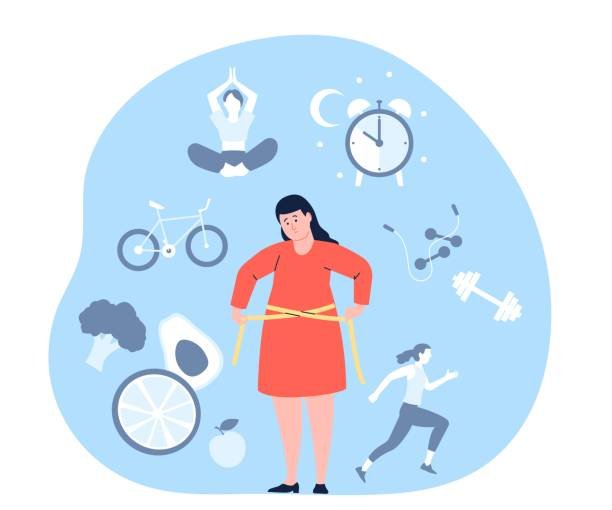
Stress is the main enemy of weight loss. From an evolutionary perspective, stress means danger. When the body is in danger, fat is not released—it serves as a strategic reserve in case of famine. Therefore, your task is to incorporate practices into your evening routine to support weight loss that activate the parasympathetic nervous system (rest) rather than the sympathetic nervous system (activity).
A. Breathing Exercises
You don’t need to meditate for hours if you don’t enjoy it. Five minutes is enough. Try the “4-7-8” technique:
- Inhale through your nose—4 seconds.
- Hold your breath for 7 seconds.
- Exhale slowly through your mouth for 8 seconds.
- This exercise acts as a “chemical switch.” It lowers your heart rate and cortisol levels, preparing your body for nighttime recovery.
B. Warm bath or contrast shower
Temperature therapy is a powerful metabolic tool. A warm bath with Epsom salt 1–2 hours before bed helps relax muscles and replenish the body with magnesium. Magnesium deficiency is directly linked to sugar cravings and poor sleep.
Why does this work for weight loss? When you relax your muscles and reduce nervous tension, you lower levels of myostatin—a protein that limits muscle growth. The more muscle you have, the higher your basal metabolic rate, and the more calories you burn even at rest.
Step 5: Preparing the Environment — The Bedroom as a Fat-Burning Factory
Your bedroom isn’t just a place to sleep. It’s a strategic space. If you want your evening weight-loss routines to work 100%, create conditions in your bedroom that resemble a “cave.”
Temperature
Studies show that sleeping in a cool room (around 18–19 degrees Celsius) increases the amount of brown fat. Unlike white fat, which stores energy, brown fat burns calories to generate heat—sleeping in the cool forces the body to expend energy on heating, which contributes to additional calorie expenditure.
Complete darkness
Even the slightest light source (a charging LED, light seeping under the door) can lower melatonin levels. Invest in a sleep mask or thick blackout curtains. Darkness is a signal for your hormones to begin their nightly work of recovery and fat burning.
Step 6: Reflection and “Unloading” the Mind
Often, the cause of evening overeating lies not in physical hunger but in emotional hunger. The day is tough, and we seek comfort in food, just as a child seeks a mother’s embrace.
To break this cycle, add the practice of “unloading your mind” to your evening routine to support weight loss.
Grab a notebook and a pen. Twenty minutes before bed, write down three things: This simple act frees up neural pathways that would otherwise drive you to seek dopamine in the fridge.
- What good things happened today? (Focusing on the positive lowers cortisol).
- What’s bothering me? (Just write it down to “close the loop” and stop replaying it in your head at night).
- Plan for tomorrow. (When you know what to expect, your anxiety levels go down).
Step 7: Gentle Stretching or Yoga Nidra
We often underestimate the link between physical tension and weight gain. Tight muscles, especially in the diaphragm and pelvic areas, disrupt venous return and lymphatic drainage. Poor lymphatic flow leads to swelling, cellulite, and a slowed metabolism.
Include 10–15 minutes of gentle stretching. You don’t need an intense workout that raises your heart rate. These should be slow, flowing movements:
- Child’s Pose (Balasana): Relaxes the back and calms the mind.
- Seated bends: Improve digestion and relieve tension in the lower back.
- Legs-up-the-wall pose (Viparita Karani): This is my favorite exercise. Lie down on the floor, move your pelvis close to the wall, and lift your legs straight up. Lie like this for 5–10 minutes. This is a miracle remedy for lymphatic drainage from the legs, relieving fatigue and normalizing nervous system function.
Conclusion: Summary of the Evening Slimming Ritual
Let’s merge all our nighttime fat-burning practices into one practice. Visualize this process as your way toward achieving a thinner physique that does not need any great accomplishments but just some of your focus. Bear in mind that weight reduction is not about sprinting; it’s about marathon running. The winners are not the ones who are running fast but are recovering properly after each day. Start implementing these rituals one at a time. Don’t try to change everything in a single day. Start with dinner without your phone, then add a cool room temperature, and after a week, breathing exercises.
- 6:30 PM – 7:30 PM: A light dinner (protein + fiber). Finish eating 3 hours before bed.
- 8:00 PM: Digital sunset. Put your phone away. Dim the lights. Air out the room.
- 8:30 PM: Relaxation ritual. A warm bath with magnesium or the “4-7-8” breathing exercise.
- 9:00 PM: Gentle stretching. “Legs against the wall” or light yoga. Jot down your thoughts in a notebook.
- 10:00 PM – 10:30 PM: Bedtime. Complete darkness, room temperature 18–19°C.
Your body is a wise system. When you create the right conditions for it to rest, it rewards you not only with a slim figure but also with energy, mental clarity, and healthy, glowing skin.
Evening routine to support weight loss are not restrictions. They are your personal self-care ritual that transforms your quality of life from within. Try it today, and you’ll be surprised at how much easier it is to wake up in the morning when you’ve spent your evening right.
Want this article to read in pdf later?
Enter your Email Address to get this article in pdf format