
Table of Contents
Why stress keeps your weight in an iron grip: a frank conversation about cortisol.
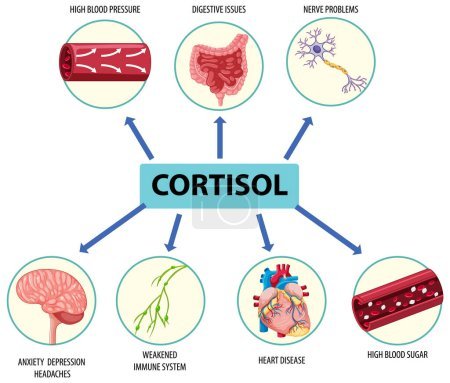
Friends, if you are reading this, you are probably familiar with impact of stress and cortisol on weight loss and this feeling: you seem to be doing everything right: counting calories, choosing healthy foods, sweating it out at the gym, but the results are either negligible or non-existent. Sound familiar? We’ve experienced it firsthand and have heard hundreds of stories from our clients. Today, we want to discuss what may be the main invisible obstacle in your way — chronic stress and the hormone cortisol. That isn’t just theory — it’s what we see in practice every day.
The silent saboteur: how stress became part of our everyday lives.
Let’s be honest: stress in the modern world is not an extreme condition; it’s the norm. Our brains, perfectly adapted for survival in the wild, are now constantly under attack from deadlines, social obligations, financial pressure, and information overload.
We remember a client, a successful 35-year-old IT specialist. He came to us with an ideal, seemingly perfect diet and exercise plan, but his weight hadn’t budged in six months. He worked 12 hours a day, slept 5-6 hours, and constantly felt “on edge.” He didn’t realize that his body was living in a state of permanent threat, and that was what was negating all his efforts in the gym and in the kitchen.
Cortisol: not an enemy, but a misguided ally.
People love to hate on cortisol, but the truth is more nuanced. It is a crucial hormone in healthy individuals. It wakes us up in the morning, influences blood pressure, and provides energy for daily activities. The problem arises when its production becomes chronic instead of episodic.
Imagine a fire alarm that goes off not only when there is a fire, but also when someone lights a candle on a birthday cake. This is precisely how our stress response system operates in modern life.
Why your body stubbornly stores fat, especially on your stomach.

When cortisol levels are constantly elevated, the body enters a state of survival mode. It receives a signal: “Hard times ahead! We need to stock up on resources!” And it does so as efficiently as possible.
Visceral fat — the fat that surrounds your internal organs — becomes the preferred storage location. This area has more receptors that are sensitive to cortisol and higher activity of an enzyme that enhances its local effect. This is not an aesthetic problem — it is a biological survival strategy. The body creates an energy reserve in an easily accessible place, believing that you may need a lot of energy at any moment to “escape from danger.”
We worked with a woman named Helena, who could do sit-ups for hours and follow a strict diet, but her stomach remained bulging. Only when we helped her reduce her stress levels (by starting to practice yoga and improving her sleep) did the situation change. Her body finally received the signal that “the threat had passed,” and it was okay to release those reserves.
Emotional swings: why stress makes us crave unhealthy foods.

Have you noticed how, on a stressful working day, your hands automatically reach for cookies or chocolate? This is not a weakness of character — it’s a matter of biochemistry.
Cortisol alters the way our brain’s hunger and satisfaction centers function. It increases concentrations of ghrelin, a hormone that stimulates hunger, and makes the brain more responsive to images of fatty foods. Sweet and fatty foods are particularly appealing when we’re stressed because they provide an instant burst of energy and a temporary feeling of comfort.
But there is a second aspect: chronic stress depletes reserves of serotonin, a neurotransmitter responsible for feelings of satisfaction and calm. Carbohydrates temporarily raise their level, creating an illusion of relief. It makes a vicious cycle: stress → craving for sweets → temporary relief → insulin spikes → weight gain → new stress due to weight gain.
Insulin resistance: a hidden threat.
Cortisol does not work in isolation. Its constant presence disrupts the delicate balance of other hormones, especially insulin.
When you are stressed, cortisol causes the liver to release more glucose into the bloodstream, theoretically to give you the energy to run or fight. But if you are not running a marathon and are just sitting in your office, this glucose circulates in your blood. The pancreas is forced to produce more insulin to remove this sugar.
Over time, cells become less responsive to insulin, resulting in insulin resistance. Now the body needs even more insulin to do the same job. And insulin is a hormone that not only regulates sugar but also promotes fat storage, especially in the abdominal area.
Breaking the stereotype: why stress burns muscle and energy.
One of the most insidious aspects of chronically high cortisol is its catabolic effect. To provide the body with quick energy, it can trigger the breakdown of muscle tissue. Amino acids from muscles are converted into glucose.
Remember: muscle tissue is metabolically active. It burns calories even at rest. The less muscle you have, the slower your basal metabolic rate. You get a paradoxical situation: you exercise, but stress takes away your muscles, slowing down your metabolism.
Moreover, constant tension literally steals your energy. Maintaining a state of “combat readiness” consumes a considerable amount of resources. You feel constantly tired, especially in the morning, even though you seem to have just woken up. You don’t have the energy to exercise or cook healthy meals. It’s a vicious circle.
How to understand that your problem is cortisol.
Over the years, we have identified several characteristic signs that indicate that stress and cortisol may be the main culprits behind stagnation in progress:
1. Stubborn abdominal fat that does not respond to diet and abdominal exercises
2. Chronic fatigue, especially noticeable in the morning
3. Sleep disturbances: difficulty falling asleep, frequent awakenings, feeling that sleep is not restful
4. Emotional swings: increased anxiety, irritability, sudden mood swings
5. Unexplained cravings for sweet, salty, or fatty foods
6. Problems with concentration, “brain fog.”
7. Changes in libido
8. Frequent colds and slow recovery — the immune system is depleted.
If you recognize yourself in this description, don’t rush to blame yourself for “weak willpower.” Most likely, your body is exhausted from constant stress and needs a different approach.
Rebooting the system: practical steps that really work
Dealing with cortisol is not about strict control, but about gently restoring balance. Your task is to let your nervous system know that “the threat has passed.”
Art of relaxation: why relaxation is a skill
The first thing we advise our clients to do is learn how to relax. Not just lying passively on the sofa with your smartphone, but conscious recovery.
It is important to note that breathing practices are not esoteric; they are physiological. Deep, diaphragmatic breathing for just 5-10 minutes each day can greatly lower cortisol. We suggest starting with something simple: 4 seconds to inhale, 4 to hold your breath and 6 seconds to exhale. Do the same for 5-10 minutes in the morning and when stressed.
Sleep as therapy. Good sleep is not a luxury – it’s a hormonal necessity.Try to sleep 7-9 hours in a dark, cool room. Create a “digital sunset” 1-2 hours before bedtime — give up screens. Blue light suppresses melatonin production, disrupting not only the process of falling asleep but also the quality of recovery.
Food that calms the nervous system.

Your diet should be your ally in combating stress, not an additional source of tension.
Avoid strict restrictions. Low-calorie diets can be highly stressful for the body and are likely to increase cortisol levels. We have seen people who, after increasing their calorie intake following a long diet, began to lose weight because their cortisol levels decreased and their metabolism normalized.
Balance is the key to stability. Include the following in every meal:
• Complex carbohydrates (oats, buckwheat, quinoa, vegetables) for gradual energy release and serotonin support
• High-quality protein (fish, eggs, poultry, tofu) to stabilize blood sugar levels
• Healthy fats (avocado, nuts, olive oil), especially those rich in omega-3 (salmon, herring, flax seeds)
Use caffeine and sugar with caution. A cup of coffee on an empty stomach can cause a sharp surge in cortisol. If you live under stress, try drinking coffee after meals or switching to green tea as an alternative. Sugar causes spikes in glucose and insulin, which is also stressful for the system.
Workouts that heal rather than harm.

Physical activity can be both medicine and poison—it all depends on the dose and type.
Listen to your body. If you feel constantly tired, intense workouts will only exacerbate the situation. During periods of high stress, focus on:
• Moderate strength training 2-3 times a week to maintain muscle mass
• Low-intensity cardio (walking, swimming, cycling) at a comfortable pace for 30-45 minutes
• Restorative practices: Pilates, stretching
We recall how one of our clients, a lawyer with an irregular schedule, replaced her daily, exhausting cardio sessions with evening walks and yoga two to three times a week. After a month, not only did her weight decrease (which had remained unchanged for six months), but her sleep quality and overall well-being also improved.
Myths and Truths: What You Really Need to Know About Cortisol.
Myth 1: Cortisol is an absolute evil. Truth: Without cortisol, you wouldn’t be able to wake up in the morning or cope with real threats. The problem lies only in chronically elevated levels.
Myth 2: Lower your cortisol, and the weight will melt away. Truth: Lowering cortisol creates the conditions under which your diet and exercise efforts begin to work. It is the foundation on which you build results.
Myth 3: You can’t train intensely when your cortisol is high. Truth: You can, but not right away. First, you need to bring your nervous system into balance, and then, gradually, listening to your body, introduce high-intensity training.
Path to yourself: when slimness begins with inner peace.

Friends, over the years, we have learned one major thing: the battle against excess weight is often not a battle against food or laziness, but against internal tension. The impact of stress and cortisol on weight loss is not an excuse, but a physiological reality.
Stop blaming yourself. Perhaps your body is not “sabotaging” your efforts, but simply crying out for help, exhausted by constant tension. Start small: take one evening walk instead of using social media, do 10 minutes of breathing exercises in the morning, and get an extra hour of sleep.
Do you recall the story of the 35-year-old IT specialist we mentioned at the beginning? He started small: he set strict boundaries for his working hours, began practicing 10 minutes of meditation before bed, and replaced one of his five weekly workouts with a massage. After three months, he not only lost 7 kilograms (which he hadn’t been able to lose for six months), but also felt truly rested for the first time in years.
Taking care of your mental state is not a luxury for the privileged class. It is a fundamental need that determines the quality of your entire life, including your physical well-being. Start managing your stress, and your body will thank you. It’s not immediate — hormonal systems change slowly but surely. Trust the process.
Your body is not your enemy. It is your ally, just waiting for the right conditions to reach its full potential. Give it those conditions. Start today.
Want this article to read in pdf later?
Enter your Email Address to get this article in pdf format