

Stuck in a weight loss plateau? Learn how to stay motivated when results are slow with science-backed mindset shifts, system-focused strategies, and emotional tools to keep progressing—even when the scale won’t budge. We’ve all been there. You start your weight-loss journey with the enthusiasm of a blockbuster movie hero. You wake up at dawn, prepare perfect breakfasts of oatmeal and berries, work up a sweat at the gym, and feel like you’re about to move mountains. The first week goes by. You feel lighter, full of energy, and confident that the scale is about to drop.
But the second week passes. Enthusiasm gives way to routine. The third week brings the first setback. And suddenly you realize: how to stay motivated when results are slow to appear becomes the central question of your existence. The numbers on the scale are frozen in place, and your reflection in the mirror looks the same as before.
If you recognize yourself in this description, take a deep breath. You are not alone, and, more importantly, you are not broken. A weight loss plateau is not a sign that you are failing. It is a sign that your body is adapting, and your mind needs a new strategy. In this article, we’ll explore not just “how not to quit,” but how to reframe your mindset so you can move toward your goal with ease, even when the mirror remains silent.
Table of Contents
Understanding the Mechanics: Why Do Results Disappear from View?
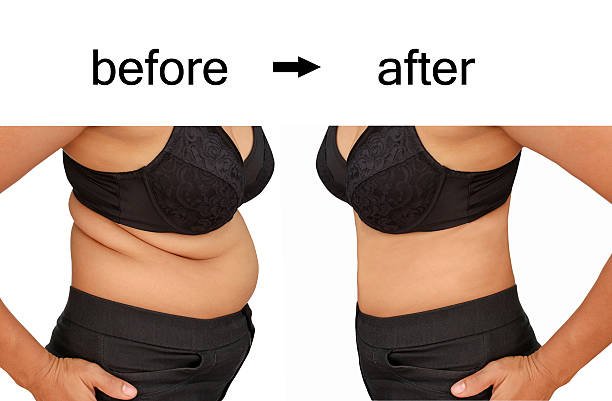
Before we start fighting waning motivation, let’s get a handle on the physiology. Imagine your body is a smart home. When you start losing weight, it’s as if you’re hacking into the control system and drastically lowering the temperature (cutting calories) and increasing activity (adding workouts).
In the first 1–2 weeks, the system is in shock. It quickly sheds “water” (glycogen and associated fluid), and you see the coveted weight loss on the scale. This is inspiring. But then the smart home activates a defense mechanism. The body says, “Oh, is there a drought? We need to conserve resources!” It slows down your metabolism, retains water to help muscles recover from new exertion, and starts clinging to fat reserves as if they were the most valuable currency.
This is when the crisis hits. How do you stay motivated when results are slow to appear? You need to stop seeing this plateau as the enemy. In fact, the plateau is your ally. It’s a sign that your body is adapting. If it didn’t resist, you’d lose weight indefinitely, which is biologically impossible. Understanding this fact lifts a huge weight of guilt and disappointment.
The Dangerous Trap of Quick Results
The modern world has conditioned us to dopamine hits. We’re used to getting a “like” a second after posting a photo, a reply to a message instantly, and an order from an online marketplace the very next day. Weight loss is the only area where nature tells us, “No, wait.”
I often compare weight loss to growing an oak tree from an acorn. You don’t dig up the acorn every three days to check if roots have appeared, do you? You water it, give it sunlight, and trust the process. It’s the same here. If you step on the scale every day, expecting a miracle, you risk getting disappointed and giving up halfway through.
The problem is that we confuse speed with effectiveness. In 90% of cases, rapid weight loss ends with a rapid regain of the lost weight—plus extra. Our goal isn’t just to drop the numbers, but to change our body composition and lifestyle forever. And that takes time.
Shifting Focus: From Results to System

If you want to know the main secret of how to stay motivated when results are slow to appear, here it is: stop focusing on the result and start focusing on the system.
What does that mean? A result is a number on the scale or a waist measurement. A system is your daily actions. A result is unstable. It’s influenced by salt intake, women’s hormonal cycles, sleep quality, and stress. The system, however, is entirely under your control.
When you wake up in the morning, don’t ask yourself, “How much do I weigh today?” but rather, “Did I do what I promised myself yesterday?” Psychologists call this the “locus of control.” By shifting your focus to your actions, you reclaim your power. You are no longer a victim of circumstances (stagnant weight); you are the captain of your own ship. Every day you stick to your system is a victory. And these small victories accumulate, creating an invisible foundation for future big changes.
- Did I drink a glass of water?
- Did I go for a walk?
- Did I prepare a healthy dinner?
Emotional Intelligence: Dealing with Disappointment
Let’s be honest. A lack of progress is frustrating. That’s normal. Feeling irritated, tired of restrictions, or envious of those who “eat and don’t gain weight” is part of human nature. But the difference between those who reach their goals and those who drop out lies in how they handle these emotions.
When you feel your motivation fading, don’t try to push harder. Don’t go on a strict diet or start working out twice a day. That will lead to a breakdown. Instead, apply the “5-minute rule.”
Tell yourself: “I feel discouraged because I don’t see progress. I give myself permission to feel this way. But I’ll take one small action in the next 5 minutes.” This could be: Often, the inertia of inaction is worse than the action itself. As soon as you get the engine running with a small step, you have a chance to make it to the top of the hill. Motivation comes after you start acting, not before.
- Putting on your sneakers and taking a walk around the house.
- Chopping vegetables for a snack.
- Just stretching on a mat.
The Role of Environment and Social Support
One of the most underrated factors in the question of how to stay motivated when results are slow to appear is your environment. If your partner eats pizza right in front of you, and your friends say: “Forget that diet, let’s go grab a drink instead,” your willpower will drain away like a smartphone battery in the cold.
You don’t have to replace all your friends, but you need to create an “information diet” and find your “tribe.”
- Explain to your loved ones: Calmly say: “I’m going through an important phase right now. I need your support. Please don’t offer me food that I’ve decided to avoid. It will help me.”
- Find like-minded people: This could be an online community, a chat group with friends who are also losing weight, or a fitness club where they know you by name. When you see that someone else is going through the same challenges (a weight plateau, fatigue), it becomes easier to cope with them. The feeling of “we’re in this together” lowers cortisol levels (the stress hormone), which, by the way, directly hinders fat burning.
Practical Tools: What to Do When Your Weight Stalls?
Theory alone won’t get you there. Let’s move on to specific steps that will help you regain control and restart your progress, even if the scale stubbornly shows the same number.
1. Put the scale away (at least for a while)
If the number on the scale ruins your mood for the whole day—hide it. The best way to measure progress when external changes aren’t noticeable is with a measuring tape and your clothes. Every two weeks, measure your waist, hips, and chest. It often happens that your weight stays the same, but the inches are coming off. This means you’re losing fat but gaining muscle (which is heavier than fat). That’s the ideal scenario!
2. Focus on quality, not quantity, of calories
Sometimes a plateau occurs because your body has gotten used to “empty” calories, even if you’re maintaining a calorie deficit. Cut out processed foods, sugar, and alcohol for two weeks. Replace them with whole foods: more protein (fish, chicken, tofu) and fiber (vegetables). Protein has a high thermic effect—your body spends up to 30% of the calories from protein just on digesting it. This can “kickstart” your metabolism.
3. Sleep—Your Secret Weapon
Seriously. If you sleep less than 7 hours, your body produces more ghrelin (the hunger hormone) and less leptin (the satiety hormone). Plus, lack of sleep raises cortisol, which signals to your body: “Store belly fat—it’s dangerous!” Perhaps the answer to the question how to stay motivated when results are slow to appear lies not in running more, but in going to bed earlier.
4. Vary your workouts
If you do the same thing every day—for example, walking at the same pace on a treadmill for 40 minutes—your body adapts and starts expending less energy on it. Surprise it. Add interval training (alternating between sprinting and walking), and start doing strength training with weights. Muscles are metabolically active tissue. The more muscle you have, the more calories you burn at rest.
Working with Your Inner Dialogue: Cognitive Distortions
Often, it’s not the plateau itself that kills us, but what we tell ourselves in that moment. Your inner critic kicks in and starts broadcasting: “You can’t do anything right,” “You always give up halfway through,” “Look at yourself—what’s the point of trying?”
This is called a cognitive distortion—“black-and-white thinking.” In the world of weight loss, there is no black and white. There is only a gray path made up of ups and downs.
To combat this, use the “Divide and Conquer” technique. When you catch yourself thinking, “I haven’t achieved anything in a month,” separate the facts from the emotions. See the difference? You didn’t just “not lose weight”; you laid the foundation for long-term health. Weight loss isn’t a sprint where only the finish line matters. It’s a marathon where every minute of the run counts.
- Fact: My weight decreased by 0 kg this month.
- Emotion: I feel like a failure.
- Context: Over this month, I didn’t miss a single strength training session, I’ve been sleeping better, and my skin looks clearer. I’ve built a habit.
The Iceberg Metaphor: Invisible Progress
I love using the iceberg metaphor when clients ask me, how to stay motivated when results are slow to appear. Imagine that your body is a huge iceberg. What we see above the water (your reflection in the mirror) is only 10% of the total volume.
When you start eating right and exercising, you begin to melt this iceberg from the bottom up. You change your hormonal balance, improve insulin sensitivity, strengthen your cardiovascular system, and build muscle mass. But nothing changes above the water! Because you’re melting the underwater part.
And then comes the moment (usually between 4 and 8 weeks) when the submerged part thins out so much that the iceberg surfaces. And you suddenly wake up and see a completely different person in the mirror. External changes always lag behind internal ones. If you give up now, when active work is already happening “underwater,” you’ll never see this emerging result.
The “Small Wins” Strategy
To keep from going crazy while waiting for the “iceberg to surface,” implement a system of micro-goals.
Don’t set a goal to “lose 10 kg.” That’s too distant and abstract a goal. Break the journey down into small, achievable steps.
Your goal for this week might sound like this: Every time you accomplish such a micro-goal, your brain gets a dose of dopamine—the reward hormone. You feel satisfied. This creates a positive feedback loop: action -> reward -> desire to repeat the action.
- “I will add a serving of vegetables to every meal.”
- “I will walk 10,000 steps at least 5 days out of 7.”
- “I will learn one new bodyweight exercise.”
While you’re focused on these small building blocks, the big house (your lean body) builds itself, unnoticed by your impatient mind.
When should you see a professional?
Sometimes a lack of progress isn’t a matter of motivation, but a matter of health. If you’re maintaining a calorie deficit, working out, and getting enough sleep, but the weight hasn’t budged in months, it might be worth checking your thyroid (TSH, T3, T4) and insulin levels. Insulin resistance, hypothyroidism, or a hormonal imbalance can undermine all your efforts.
In this case, seeing an endocrinologist or dietitian isn’t a sign of weakness, but a sign of wisdom. It’s part of the strategy. Don’t be afraid to ask for help. Even when it comes to how to stay motivated when results are slow to appear, sometimes the best approach is to hand the wheel over to a professional who will tell you: “It’s okay, let’s just adjust the plan.”
Conclusion: Motivation Is a Habit
Let’s go back to the beginning. How do you stay motivated when results are slow to appear? The answer lies in redefining motivation itself. We’re used to thinking that motivation is a spark, a bolt of lightning that strikes us and compels us to act. But that’s not the case.
Motivation is discipline. It’s the habit of choosing what’s important, not what you want right here and now. It’s the ability to trust the process more than your fleeting emotions.
I want you to remember one thing: your body isn’t a bank account where you check your balance every morning. Your body is a garden. You can’t force a rose to bloom in two weeks by tugging on its stem. You can only create the right conditions every day: water it, fertilize it, pull the weeds. And one day, when you least expect it, you’ll wake up in the middle of a blooming garden.
Keep doing what you need to do. Keep coming to the gym, even when you don’t feel like it. Keep choosing chicken and salad over pizza, even when you don’t see results. Because the results are already there. They’re just hiding beneath the surface, gathering strength.
Your progress hasn’t stopped. Your patience is simply being tested. And you are capable of passing that test. Don’t wait for motivation to appear before you start. Start taking action right now, from where you are, with the resources you have.
And very soon you’ll see that the frozen needle on the scale will finally move, pulling your life along toward the goal you’ve been working toward for so long.Remember: the journey is made by walking. Even if it feels like you’re standing still, every step you take brings you closer to the finish line. Just keep going.
Want this article to read in pdf later?
Enter your Email Address to get this article in pdf format