

Friends, let’s be honest when thinking about eating healthy and working out but scale not moving. We can’t get away from this kind of talk: “I’m doing everything right eating clean, working out until I can barely move, and the scale just doesn’t want to drop. What is going on?” This frustration is a pain point shared by all those who have set out on a path to change. You might even think that you are entitled to see some progress, but it seems to be the scale that is laughing at you by indicating the very same figures over and over again. Before you give up, let us guide you through this tricky territory. Scales are a tricky tool. They show your total weight, but they don’t tell the whole story. They don’t know how much muscle you have, how much water you’re retaining, or how much your waistline has been changed. Today, we’ll break down this puzzle piece by piece and give you a clear plan of action. We promise: most of the time, it’s not a dead end, just a turn in your journey.
Table of Contents
Section 1: First, make sure you are genuinely stuck.
1.1 Plateau or just life? Defining normal fluctuations.
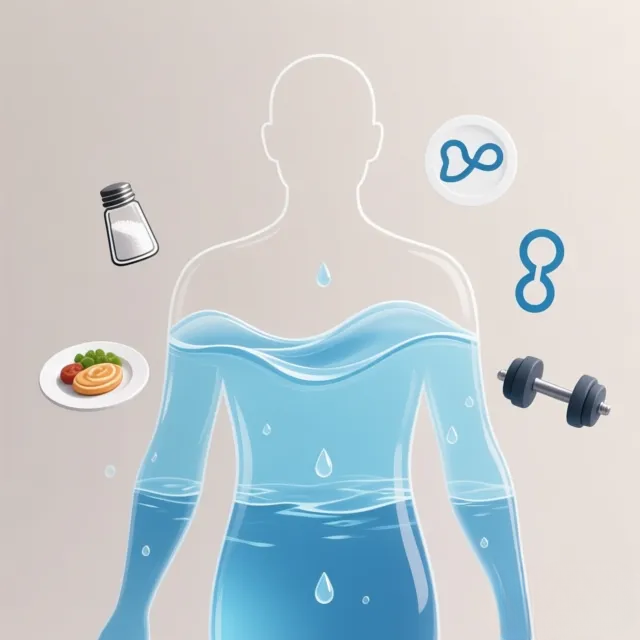
Your weight is unstable by nature. Even with an ideal diet, it can fluctuate by 1-3 kilograms during the day and week. The reasons for this are water retention due to sodium, the amount of food in the intestines, hormone levels (especially in women), and muscle recovery after training. When we talk about a real plateau, we mean no change in average weekly weight for 3-4 weeks. Don’t compare Monday to Monday — analyze the trend. If two weeks ago your average weight was 75 kg, a week ago it was 74.8 kg, and now it’s 75.1 kg, this is not a plateau. This is statistical noise.
1.2 The art of weighing without being neurotic.
Forget about weighing yourself after training, in the evening, or at different times of the day. The only accurate method is to weigh yourself on an empty stomach, after your morning toilet, before eating or drinking, wearing the same minimal amount of clothing. Record your weight every day, but only react to the average over 7 days. Note in your diary the days when you eat a lot of salty food, drink alcohol, have late dinners, or start your menstrual cycle — this will help explain any spikes.
1.3 Your True Progress Indicators.
Scales are just one of many tools. If they aren’t moving, turn to other, more honest metrics. Take a tape measure and measure your waist, hips, chest, and biceps once every two weeks. Take photos in the same lighting and clothing. Pay attention to how your jeans fit — have they become looser around the hips and waist? Track your strength: can you lift more weight, do more reps, climb stairs more easily? Even a decrease in your resting heart rate and improved sleep are signs of progress.
1.4 “Clothes fit better, but weight stays the same” — the main secret of beginners.
This is a classic sign of body recomposition: simultaneous muscle growth and fat loss. It is most common in those who have just started or returned to strength training. Muscle is denser than fat: a kilogram of muscle takes up less volume than a kilogram of fat. You become more compact and slimmer, but your weight stays the same. Also, after starting training, the body can store more glycogen in the muscles, and with it, water, which adds to the numbers on the scale, but not to the waistline.
Section 2: Nutrition — where deception is most often hidden.

2.1 “Healthy” does not mean “unlimited.”
Nuts, avocados, olive oil, feta cheese, dark chocolate, and homemade granola bars are all fine. But a spoonful of olive oil contains about 120 calories, and a handful of nuts contains up to 200 calories. You can eat only clean foods, but still consume too many calories. The same goes for “healthy” restaurant food: sauces, dressings, and cooking methods can all double the calorie content of a dish.
2.2 Invisible Tracking Errors.
Do you weigh chicken breast but forget about the oil used to fry it? Do you count a spoonful of honey but not the milk in your coffee? Did you “just try” some sauce, finishing off your child’s leftovers, or grab a handful from the bag? All of this adds up to hundreds of invisible calories that can completely negate your deficit. Alcohol is a separate issue: it’s not just “empty” calories, but also a weakening of self-control, leading to unplanned snacks.
2.3 Priorities on your plate: protein and fiber.
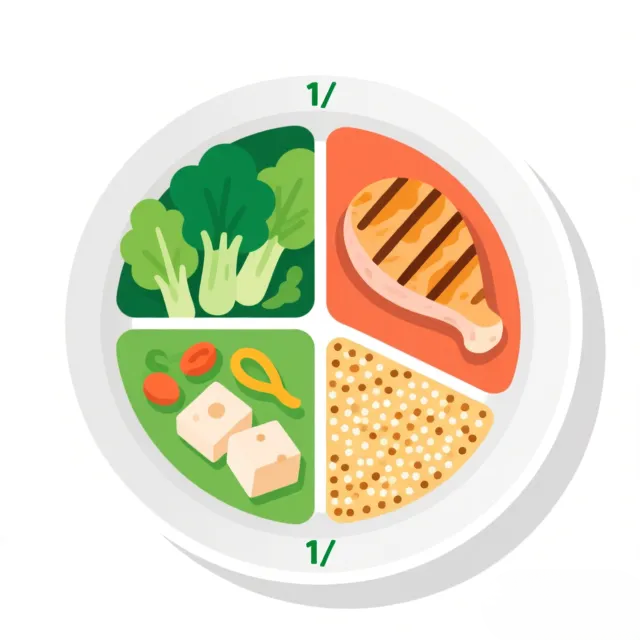
Protein is the top nutrient to include if you want to manage your hunger and keep your muscles. Target 1.6, 2.2 grams of protein per kilogram of your ideal weight. Vegetables high in fiber will make your meal more filling and satisfying. Create your meal based on a basic rule: a palm of protein (meat, fish, tofu, eggs), a fist of complex carbohydrates (grains, potatoes), two fists of vegetables, and a thumb of healthy fats (oil, nuts, avocado). This framework automatically makes calorie regulation better.
2.4 Time—Not Your Enemy, But Your Ally.
Eating late at night does not make you fatter if you stay within your daily calorie limit. However, late meals can impair your sleep, and poor sleep, as we will learn later, hinders progress. Calories from juice, sweet coffee, or a five-ingredient protein smoothie count just as much as calories from solid food, but they are less filling.
2.5 Cycle of “strictness-breakdown.”
The picture is familiar: Monday through Friday—a strict deficit, minimal carbohydrates. And on Saturday, a “well-deserved” cheat meal that turns into a cheat day, or even a cheat weekend. As a result, the weekly deficit is reduced to zero. A much more effective approach is to limit your intake evenly and moderately, including your favorite foods in the planned amounts. This is not a diet, but a nutrition system that you can maintain for months.
Section 3: Workouts—do they work for your goal?

3.1 Why weight may remain stable or even increase after strength training.
New or intense strength training causes micro-tears in the muscles. Your body sends fluid with nutrients to these areas for repair, causing temporary swelling. That’s not fat, it’s water. The process can mask fat loss on the scale for the first 2-6 weeks. Increased strength and endurance are the first signs that you are on the right track.
3.2 Inconsistency between your program and your goals.
If your goal is to change your body composition (less fat, more muscle), then cardio alone is not the best way to go. Cardio will use up calories, but it cannot be the source of growing muscle that is metabolically active and that will burn more calories. The main thing is to do strength training 2 to 4 times a week and to increase the load progressively. One can do cardio in order to increase his energy expenditure, not as a way to “pay” for the dessert he ate. Unplanned, irregular workouts without any progress tracking will hardly bring visible results.
3.3 NEAT — the dark horse of weight loss.
NEAT (non-exercise activity thermogenesis) is all your movements outside of training: walking, cleaning, fidgeting in your chair. When individuals begin their regular training, it is quite common for them to unintentionally lower their NEAT (Non, Exercise Activity Thermogenesis): they tend to sit more, walk less, and take the elevator instead of the stairs. The body is always looking to conserve energy. Changing the daily steps by 2, 000, 3, 000 can “eat up” half of the calorie deficit created by a workout without one even realizing it. A very easy way to ensure this does not happen is to keep track of the steps. If you notice a step count decrease, then add more walks to your day.
3.4 Overtraining — when more is worse.
Symptoms: constant fatigue, irritability, insomnia, decreased strength, and compulsive eating, especially of sweets. The body increases cortisol levels when it’s stressed, which can cause water retention and slow down fat burning. Sometimes the best thing to do isn’t to add more workouts, but to cut one out, get more sleep, or take a week off to rest up.
Section 4: Recovery, stress, and water—the main manipulators of weight.

4.1 Sleep is not a luxury, but a metabolic necessity.
Sleep deprivation directly impacts hunger (ghrelin) and satiety (leptin) hormones. You get hungrier, feel less full after eating, and desire high, calorie foods. If you are sleep deprived over a long period, you will also raise your cortisol levels, which may cause fluid retention. Getting seven hours of quality sleep is equally important as exercise for your plan.
4.2 Stress and scales: an unobvious connection.
Chronic stress (work, relationships, finances) keeps cortisol levels constantly high. This is not only water but a potential increase in visceral fat on the abdomen, even with an overall calorie deficit. Managing stress through meditation, walking, hobbies—this is not self-development but part of a body transformation strategy.
4.3 Sodium and carbohydrates: why tomorrow the scales will show +2 kg.
One day of eating salty foods (sushi, pizza, restaurant meals) can lead to water retention. Carbohydrates are stored as glycogen, each gram of which stores 3-4 grams of water. After a day of high carbohydrate intake, you may see weight gain, which will disappear within 2-3 days after returning to your regular diet. It is not fat gain.
4.4 Hormonal cycles and water.
Women’s weight can fluctuate by 1-3 kg during their menstrual cycle due to changes in estrogen and progesterone levels. Most often, water retention peaks in the days before the start of menstruation. Compare your progress not with your weight a week ago, but with your weight in the same phase of your last cycle.
Section 5: Practical Steps: Your Plan for Overcoming Stagnation.

If, after analysis, you realize that the plateau is real, here’s how you should take action.
Model A (imperfect consistency): Focus on one slight improvement. For example, weigh and record ALL oils and sauces honestly for two weeks. Or make sure to take 8,000 steps every day. Don’t try to change everything at once.
Model B (metabolic adaptation): You’ve lost weight, so now your lighter body needs fewer calories to function. Reduce your daily calorie intake by 100-150 kcal or add 15 minutes of cardio/2,000 steps.
Model C (recomposition): If your measurements and photos show progress, but the numbers on the scale aren’t changing, keep going! You’re at the perfect point. Only change your plan when your measurements stop changing.
Model D (overload): Focus on your recovery. Get an extra hour of sleep, cut your workouts by 20% for a week, and try some stress-reducing techniques.
Model E (“everything is fine” ): Conduct a strict audit. For 3 days, weigh EVERYTHING to the gram (including a slice of cucumber). Check to see if your steps are declining on training days. Make sure that your estimated “maintenance calories” are still relevant for your current weight.
Section 6: A Simple 14-Day Reboot Plan.
Days 1-3: Observation phase. Weigh yourself every morning. Record all food and drinks without judgment. Measure your body circumference and take photos. Set an average daily step count.
Days 4-10: One change phase. Choose ONE hypothesis: 1) Reduce calorie intake by 10% without changing food quality. 2) Increase daily steps to 10,000. 3) Increase protein to the target value and eliminate liquid calories. Keep your workouts the same.
Days 11 to 14: The Analysis phase. Determine your average weight over the last 7 days. Compare this value with that of the first three days. If there is a change in the correct direction, i.e. the hypothesis is confirmed, you can proceed. Otherwise, decide on another single change for the following 14 days.
Section 7: When to Get Help.

Consult your doctor if:
• You experience rapid, unexplained weight gain with swelling.
• You experience severe chronic fatigue, sensitivity to cold, dry skin, and hair loss (symptoms of possible hypothyroidism).
• Women experience a complete absence of menstruation or extremely irregular cycles against a background of deficiency and training.
• You have symptoms of PCOS (irregular cycles, hirsutism, acne).
• You suspect that your current plan has triggered an eating disorder.
Come to your appointment with your food diary, weight chart, and sleep chart for the last 3-4 weeks. This is invaluable information for a specialist.
Conclusion: Trust the process more than the scales.

Friends, transforming your body is a marathon, not a sprint. The statement “I eat right and exercise, but the scale isn’t showing results” often indicates that you are about to experience a real, qualitative change that cannot always be reflected by numbers immediately.
Your plan for today:
1. Stop panicking. Objectively assess your plateau: 3, 4 weeks without a change in average weekly weight.
2. Expand your toolkit. Take measurements, photos, note how your clothes fit, and use strength as an indicator.
3. Make a sober inventory of the most probable cause: nutrition (accuracy of records), NEAT (number of steps), recovery (sleep and stress).
4. Introduce changes gradually and allow them time (at least 2 weeks).
5. If you have signs of distress, consult a doctor. Exclude medical causes. Remember: the body changes in waves, not linearly. Trust the positive habits you have created. They are already making you healthier and stronger from the inside, even if the scale does not show it. Keep going.
Want this article to read in pdf later?
Enter your Email Address to get this article in pdf format