
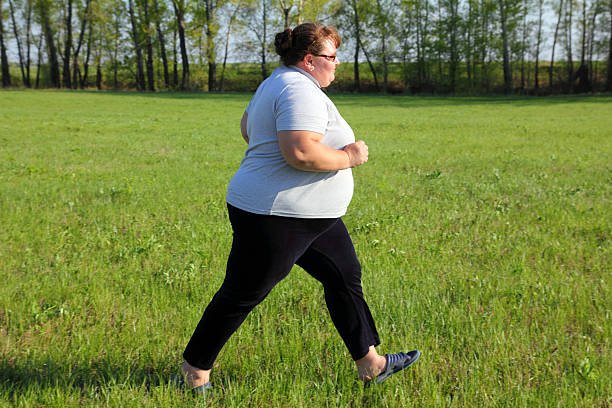
Can walking everyday reduce belly fat? Discover the science-backed answer, plus simple strategies to make daily walks more effective for losing stubborn belly fat.
Do you stand in front of the mirror, stare at your belly, and ask the same question – can walking everyday reduce belly fat? The question pops up in my head quite often. In an era when Instagram pages have videos about intense exercises and lifting barbells, walking looks rather simple for achieving any result.
Nevertheless, we can be honest about our intentions here – not everyone wants to get sweaty and lift things from the floor. Sometimes people just need an easy and sustainable option without gym classes. This time, walking becomes an option for everybody.
After conducting research, analyzing scientific studies and talking to professionals, we can assure you that the answer is positive. However, there are some nuances to keep in mind in order to make your walks more effective for reducing belly fat..
Table of Contents
Understanding the enemy: why is belly fat so hard to get rid of?
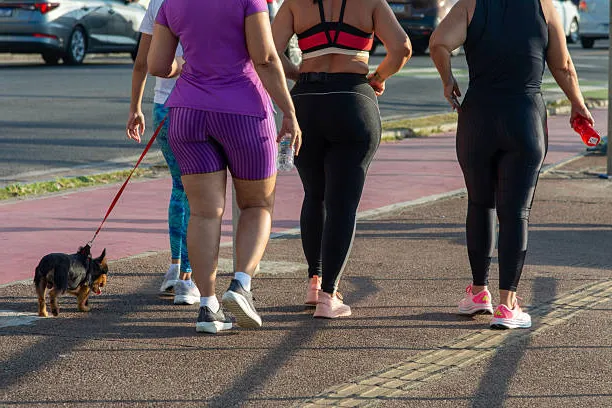
Before we begin our workout, we must know who we are dealing with. The excess accumulation of fat on the stomach is not only a question of aesthetics but a medical condition. From the medical perspective, there are two types of fat deposits – subcutaneous and visceral.
It is the second type of fat which worries people. Being placed deep in the abdominal cavity, it encircles one’s internal organs – liver, pancreas, and intestines. It is known for its metabolic activity; in other words, fat deposits behave similarly to endocrine organs, producing inflammatory substances and contributing to heart disease, type 2 diabetes, and insulin resistance.
But why does the body try to protect it? First of all, our abdomen is a “depository” of energy for future use. In case of any threats, a person experiences a stress response. As a result, he/she produces more cortisol – the hormone that instructs the body “to keep this fat for as long as you can – we are in danger!”
And here we return to our main question: Сan walking everyday reduce belly fat, if evolution and hormones are working against us? It turns out that walking is the perfect “antidote” to this problem.
The Science Behind It: What Happens to Your Body When You Walk
However, many people think that fat burning occurs only after 20 minutes of running or intense exercises. This assumption is not correct because our body is hybrid. No matter what physical activity you perform, it will be based on both types of fuels. However, different intensities are related to different ratios of fuel types.
Talking about walking in a routine mode, it means that we use “fat burning zone”. It involves moderate activities which are characterized by a heart rate of 50-70% of maximum. In this case, the body receives the majority of its energy from fat reserves and not from carbohydrates (glycogen) stored in muscles.
It can be clearly demonstrated through my personal experience. During one month, I decided to replace one coffee break at work with 15-minutes walking. As a result, I did not lose much weight, but I felt much lighter after lunch and noticed visible slimming of my waistline. It is clear proof of fat reduction.
- Fat Oxidation: During a leisurely walk, your mitochondria (the cells’ powerhouses) receive a signal to break down fatty acids more actively.
- Insulin sensitivity: Regular walking makes cells more responsive to insulin. When insulin sensitivity is high, the body stops frantically storing every calorie consumed specifically in the abdominal area.
- Coritzole reduction: Unlike high-intensity workouts, which can sometimes raise cortisol (especially if you haven’t had enough sleep), walking acts as a calming agent. It lowers stress hormone levels, giving your body “permission” to release visceral fat.
Why walking is more effective than running for some people
Here I want to make an important point. I’m not against running. Running is great. But if your goal is specifically to reduce belly fat, and you’re experiencing chronic stress or are more than 10–15 kg overweight, walking may be the wiser choice.
Why is that? Because running puts a high-impact load on your joints. But more importantly, it triggers a strong stress response. If you’re already living in a “fight-or-flight” state due to deadlines, loans, and sleep deprivation, adding running to the mix could send your cortisol levels skyrocketing. And high cortisol, as we know, is belly fat’s best friend.
Daily walking, on the other hand, shifts the nervous system from sympathetic mode (stress) to parasympathetic mode (rest and recovery). This is the ideal environment for sustainable weight loss.
The Secret Weapon: NEAT (Non-Exercise Activity Thermogenesis)
The fitness industry would have you believe that an hour spent in the gym will make the world of difference. However, the reality of the situation is that, in most cases, a flat stomach is obtained thanks to the principle known as NEAT (Non-Exercise Activity Thermogenesis) or thermogenesis from physical activities which are not exercise-related.
NEAT refers to all calories burned by an individual while walking around, cleaning their house, working in their garden, washing the car, pacing while speaking on the phone, walking to the subway and doing anything else that does not involve exercising.
“Can daily walking help reduce belly fat?” The question should actually be posed as “Can daily NEAT improve the person’s condition?” And the answer is definitely “yes”.
People who spend their days sitting down have much more visceral fat than people who keep themselves constantly on the go, not necessarily sprinting miles and miles every day. For example, someone might be a fit desk jockey, meaning that they go to a CrossFit session every day, but spend other 15 hours sitting down. Their metabolic processes will surely slow down.
Walking is an effective means of breaking down hours of sitting down and being inactive. Each time when an individual stands up and walks, they stimulate the process of lipolysis via activating an enzyme called lipoprotein lipase. Sitting reduces the level of activity of the enzyme; walking stimulates it.
How to Walk Properly to Lose Belly Fat: Tactics and Strategy
So, we’ve established that walking works. But simply stepping outside and taking a slow stroll to the store isn’t the same as a strategic fat-burning workout. To answer the question can walking everyday reduce belly fat? in the affirmative for your specific case, you need to follow the rules.
Here’s the plan I give to friends and readers:
1. Intensity: the “conversation” rule
You don’t need to be gasping for breath like during a sprint, but you shouldn’t be chatting nonstop either. The best pace is the “talk test” pace. You should walk fast enough to speak in full sentences, but not fast enough to sing comfortably. If you can easily hum your favorite song—pick up the pace. If you can’t string two words together—slow down.
2. Duration: the magic 45 minutes
Biochemically speaking, during the first 20-30 minutes of walking, your body relies on glycogen or sugar reserves found in the muscles. However, after around 30 minutes of moderate activity, the body starts using fat reserves as the main fuel source.
For those who want to reduce belly fat, try to make sure that your walks are 45-60 minutes long per day. However, if you cannot afford to give yourself an hour out of your busy schedule, don’t worry because two walks of 30 minutes each (one in the morning and another in the evening) will be equally beneficial.
3. Consistency beats heroics
It’s better to walk 5 kilometers every day than 15 kilometers once a week until you’re out of breath. Fat burning is a long-term game. Your body needs to get used to the idea that activity is the new normal. Only then will it agree to part with its strategic fat reserves around your waist.
4. Technique: Walk like a model, not a tired office worker
I often see people who slouch while walking, stare at their phones, and drag their feet. Not only do you risk back pain this way, but you also reduce your effectiveness.
- Posture: Keep your back straight, chest out, and shoulders relaxed and lowered.
- Arms: Bend your arms at the elbows at a 90-degree angle and actively swing them back and forth. This increases your speed and gets your heart pumping faster without putting extra strain on your knees.
- Footwork: Step from heel to toe, pushing off with your toes.
A True Story: The 10,000-Step Experiment
The story of one my friends, Anna, also comes to mind. She worked as a marketer, was highly stressed and was convinced that without membership at some fancy gym she wouldn’t achieve her goal of having a flat tummy. I don’t think she was aware of whether walking can be helpful in losing extra weight given her “broad bones” and “hormones.”
Our decision was to just walk, to take things easy and not to engage in any kind of diets (for now) or calorie counting. The only condition – to reach 10,000 steps per day for 3 months. And again, it was not just accumulating steps but making time for it: 30 minutes of brisk walking on the way to work instead of going by subway (in the morning) and another 30 minutes before bed.
How did it affect Anna? By the first month she stopped retaining water and gained sleep quality. By the second month and without changing anything about her diet Anna saw a difference in her jeans becoming looser around waistline. In 3 months’ time she was able to lose 4 centimeters around her waist. Again, not a model in a magazine, yet significant amount of her visceral fat which was squeezing her organs and causing shortness of breath reduced. But most importantly – Anna loved walking.
Synergy: walking + nutrition = results
I have to be honest with you. Walking is a powerful tool, but it can’t overcompensate for poor nutrition. If you walk 10 km every day but eat fast food three times a day and drink sugary soda, the belly fat will disappear extremely slowly—or not at all.
Imagine that your body is a car. Daily walking is a great way to start the engine and burn fuel (fat). But if you constantly fill the tank with the wrong fuel (trans fats, sugar, processed foods), the engine will run rough.
Here are three simple dietary changes that will enhance the effects of walking:
- Cut out liquid calories. Juices, sugary coffee, alcohol, and soda are the quickest way to accumulate visceral fat. The liver can’t keep up with processing fructose and ethanol, so it sends the excess straight to your belly. Replace these with water, green tea, or water with lemon.
- Focus on protein. When you’re losing weight, it’s important not to lose muscle mass. Muscles are like furnaces that burn calories even at rest. Make sure every meal includes a source of protein: eggs, fish, chicken, tofu, or legumes.
- Fiber is your friend. Vegetables, especially leafy greens, fill you up without extra calories and help regulate blood sugar levels. Stable blood sugar = low insulin = access to fat stores.
How to boost fat burning while walking: the interval method
If you’re already used to daily walks and feel like your body has adapted, it’s time to spice things up. No need to run—just add intervals.
Interval walking involves alternating between a fast pace and a recovery pace.
Here’s how it works in practice: Why does this work? This method creates an oxygen debt. After such a workout, your body will consume more oxygen, and therefore burn more calories over the next 24–48 hours (the EPOC effect—excess post-exercise oxygen consumption). This helps “burn off” belly fat even when you’re sitting at your computer.
- Warm-up: 5 minutes of light walking.
- Interval 1: 3 minutes of brisk walking at your maximum effort (it should be difficult to talk).
- Recovery: 3 minutes of light walking.
- Interval 2: 3 minutes of brisk walking.
- Recovery: 3 minutes of light walking.
- Repeat the cycle 4–5 times.
- Cool-down: 5 minutes of light walking.
The psychological aspect: why walking improves eating habits
Do you know what often prevents us from losing belly fat? It’s not a lack of exercise, but evening overeating. We stick to our diet all day, but by nightfall we lose control and eat everything we see in the fridge.
Daily walking is incredibly effective at tackling this problem. And here’s why.
First, an evening walk acts as a “switch” between work stress mode and relaxation mode. When we return from our walk, cortisol levels drop, and we stop seeking comfort in food. We no longer need a “treat” to calm down because we’re already calm.
Second, a morning walk on an empty stomach (if you don’t have hypoglycemia) can help set your metabolism to burn fat throughout the day. Many experts on intermittent fasting agree that light cardio on an empty stomach increases insulin sensitivity.
Mistakes That Undermine Your Efforts
Even when they know whether daily walking can help reduce belly fat, people still manage to sabotage their results. Let’s break down the most common mistakes so you can avoid them.
Mistake 1: Overestimating Calories Burned
Many people, when they start walking, think: “I burned 300 calories today, so I can treat myself to a pastry.” The problem is that a pastry contains 400–500 calories, and you’re not only negating your calorie deficit but also loading your body with fast carbs that are instantly stored as fat. Don’t reward yourself with food for going for a walk.
Mistake 2: Monotony
If you walk the same route every day at the same pace, your body adapts. It becomes “energy-efficient.” To force your body to burn energy, you need to vary the terrain: add hills, walk on sand or gravel, and change your pace.
Mistake 3: Insufficient water intake
Fat burning is a chemical process that requires water. If you’re dehydrated, your metabolism slows down. Drink water before, during (if the walk is long), and after walking.
Conclusion: Your First Step Toward a Flat Stomach
Thus, the problem of this article leads us once again to the question we raised at the very beginning: can daily walking help reduce belly fat?Now I hope that, after this article, there will be no doubts on your part anymore.
Of course, yes! Definitely and unequivocally yes, provided that the walking should be systematic rather than haphazard, not an excuse for reaching some step counter goal. Walking is a kind of stress regulation technique that allows you to normalize insulin sensitivity and metabolic processes.
Walking is a marathon and requires persistence, not speed. You will not get six packs by the end of the week, but you will see how the inches go away, digestion will improve, bloating will disappear, and you’ll feel a surge of energy.
There is no need for costly gym visits; there is no need to torture yourself with a diet. All that you need is a comfortable pair of shoes, half an hour a day and a desire to change something for the better in yourself.
Make the first step in the right direction right now. Start walking to invest in your body which is the most profitable investment object ever.
Trust me, in a month you’ll thank yourself for getting started. Your stomach will be flatter, your mind clearer, and your life more active. Just keep walking. Frequently Asked Questions (FAQ)
Question: Do I need to walk in the morning on an empty stomach to lose belly fat faster?
Answer: It depends on how you feel. Walking on an empty stomach can boost fat burning, but if you feel dizzy or your energy drops afterward, it’s better to have a light snack (like a banana) 30 minutes before your walk. The key is consistency, not the time of day.
Question: How many kilometers should I walk per day?
Answer: Focus on time and heart rate, rather than kilometers. The optimal amount is 5–8 km per day (that’s about 8,000–10,000 steps) at a pace that gets your heart beating faster. To burn belly fat, it’s critical to maintain a moderate heart rate for at least 40–60 minutes.
Question: Can I lose belly fat just by walking if I’m severely obese?
Answer: Walking is the best place to start. It’s gentle on your joints and helps lower cortisol levels. It will work great in the beginning. However, as your body adapts, you may need to add dietary control (creating a slight calorie deficit) and, later on, strength training to tone your muscles so your skin doesn’t sag.
Question: Does walking help get rid of lower belly fat, often called a “muffin top”?
Answer: Unfortunately, there is no such thing as spot fat loss. You cannot tell your body to lose fat specifically from the lower abdomen. Walking will help reduce your overall body fat percentage, and the abdominal area (including the lower part) will slim down gradually. Combining walking with a calorie deficit and core-strengthening exercises will give you better aesthetic results.
Want this article to read in pdf later?
Enter your Email Address to get this article in pdf format