

Discover how to stop sugar cravings for weight loss using 7 science-backed strategies. Learn to balance hormones like insulin, add key nutrients, and break the dopamine cycle—without relying on willpower. Imagine trying to drive a car with one foot on the gas and the other on the brake. That’s exactly how most people feel when they’re trying to lose weight. On the one hand, you genuinely want to lose weight. On the other hand, your body is literally pulling you toward the pastry display case. I’ve been there. I went on diets, binged at night, and then hated myself for my weakness. And only when I stopped fighting myself and began to understand how my body works did I find the answer to the question of how to stop sugar cravings for weight loss.
Spoiler: it’s not about willpower. It’s about biochemistry, hormones, and a few simple but powerful changes to your daily habits. In this article, I won’t be urging you to impose extreme restrictions. Instead, I’ll offer you a clear roadmap. We’ll break down why your brain craves sugar, how to take control of this process, and finally start losing weight without feeling like you’re in a besieged fortress.
Table of Contents
Why We Can’t Stop: The Chemistry on Your Plate

Before we get into tactics, let’s be honest: a sweet tooth isn’t a character flaw. It’s an ancient biological mechanism that has collided with the modern food environment.
Your brain is a very voracious organ. It consumes about 20% of your total energy, and its favorite fuel is glucose. Thousands of years ago, when food was scarce, finding a sweet fruit or honey was a huge stroke of luck. Your brain rewarded you with a rush of dopamine—the pleasure hormone—so you’d remember: “This is good; this saves lives.”
But today we live in a world where sugar is added to literally everything. It’s hidden in sauces, sausages, bread, yogurt, and even “healthy” granola bars. Our ancient brain doesn’t understand that we’re no longer on the savanna. It still thinks that every sweet treat is a rare stroke of luck and demands more.
Insulin swings—that’s the main reason for your cravings. When you eat a bun or a piece of candy, your blood sugar skyrockets. The pancreas releases a powerful dose of insulin to drive that glucose into the cells. But insulin often goes overboard. Sugar drops below normal, and an hour or two after the “treat,” you feel exhausted, irritable, and… crave something sweet again.
It’s a vicious cycle. You eat sugar to boost your energy, but sugar makes you crave even more sugar. That’s why our main goal when we talk about how to stop sugar cravings for weight loss is to break this cycle by stabilizing your glucose levels.
Strategy #1: Protein Is Your Best Ally
The major flaw in my initial attempts at losing weight was the attempt to cut out sweets without providing myself with anything else. My meals consisted of oats for breakfast that were boiled only in water, buckwheat for lunch, and by nightfall, I was already scanning the horizon for chocolate. That’s because I was feeding my body only carbohydrates, even if they were “complex.”
Protein is a game-changer. Why? Because protein doesn’t cause insulin spikes. It digests slowly, keeping you full for 3–4 hours and providing a steady flow of energy.
Here’s what I suggest you do starting tomorrow morning. Start your day with protein. Instead of oatmeal or toast with jam, eat 2–3 eggs. Make an omelet with vegetables or add a piece of fish. If you don’t eat animal products, try tofu, tempeh, or a plant-based protein shake.
I remember how one of my clients—let’s call her Anna—complained that she “craved” sweets every day at 11 a.m. We replaced her morning oatmeal with an omelet and avocado. Three days later, she wrote: “I can’t believe it. I forgot about the cookies. I just forgot.” This isn’t magic. It’s biochemistry.
Studies confirm: increasing protein intake to 25–30% of daily calories reduces obsessive thoughts about food by 60%. You literally curb cravings not with willpower, but with satiety.
Strategy #2: Fats Are Not Enemies, But Protectors
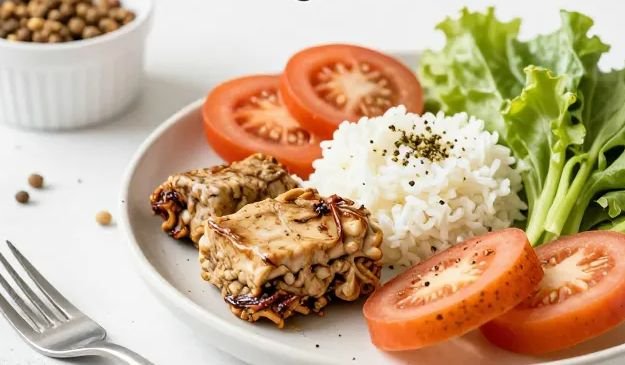
In the 90s, we were led to believe that fats were evil. We rushed to buy low-fat yogurts, cottage cheese, and cookies. But here’s the irony: when fat is removed from a product, it becomes tasteless. To restore the flavor, manufacturers add… sugar. A huge amount of sugar.
Healthy fats slow down the absorption of carbohydrates. Imagine you’ve eaten an apple. The sugar from it will enter your bloodstream quickly, and in half an hour, you might feel hungry again. Now imagine you ate an apple with a handful of walnuts or a spoonful of almond butter. The fats create a “barrier” that slows down the absorption of glucose into the bloodstream. Your blood sugar rises gradually and drops just as gradually—no sharp crash—no panic cravings for sweets.
Add to your diet: Don’t be afraid of calories. What you should fear are sugar spikes, which make you eat an extra 500 calories in the form of cookies in the evening.
- Avocado (half for breakfast or in a salad).
- Extra virgin olive oil.
- Fatty fish (salmon, mackerel) 2–3 times a week.
- Nuts and seeds (flaxseed, chia, almonds).
Strategy #3: Fiber — a natural stabilizer
Fiber is what our bodies don’t digest, but without which we can’t control our appetite. It works like a sponge. Once it enters the stomach, it swells, creating volume, and slows down the passage of food.
I often follow the “vegetables first” rule. Before eating the main course (whether it’s meat, fish, or a side dish), I eat a plate of vegetable salad dressed with oil or a serving of steamed vegetables. Fiber creates a cushion that smooths out subsequent spikes in blood sugar.
If you find yourself craving sweets, ask yourself, “Have I eaten enough vegetables today?” Often, the answer will be no. Adding fiber to every meal is one of the simplest and most effective ways to curb sugar cravings for weight loss.
Strategy #4: Micronutrients — the silent conductors of your appetite
Sometimes your body craves chocolate not because it “wants something sweet,” but because it’s lacking a certain mineral. I call this an “SOS signal”.
Magnesium. Are you aware that the reason why most women experience chocolate cravings prior to their menstrual cycle is due to magnesium deficiency? This is because dark chocolate contains magnesium, which the body craves. Should you have uncontrollable cravings for chocolate, it may be wise to consume pumpkin seeds, almonds, spinach, or even take some form of magnesium supplement. Often, the craving goes away on its own.
Chromium. This mineral directly affects the cells’ sensitivity to insulin. When you’re deficient in chromium, your cells need more insulin to “open the doors” for glucose. Your blood sugar levels may spike, and you’ll feel constantly hungry. Chromium is found in broccoli, eggs, liver, and sprouted grains. Some nutritionists recommend chromium picolinate supplements to reduce carbohydrate cravings.
Zinc and iron. A zinc deficiency reduces the production of leptin—the hormone that tells the brain, “I’m full, I can stop”. Anemia (low iron) often manifests as sugar cravings because the body is trying to get quick energy to produce red blood cells.
Before rushing to buy supplements, I recommend getting tested. But adding seafood, nuts, red meat, and leafy greens to your diet will be beneficial in any case.
Strategy #5: Break the dopamine loop
Sugar isn’t just food. It’s the fastest way to get a dopamine hit. And that’s the main trap.
When we’re tired, upset, anxious, or just bored, the brain looks for the easiest path to pleasure. And that path is sugar. But the dopamine system works like this: the more often you stimulate it in the same way, the higher the sensitivity threshold becomes. You need more and more sugar to get the same pleasure.
How can you tell physical hunger from emotional hunger?
I use a simple rule. Ask yourself: “Am I ready to eat a piece of chicken or a green apple right now?”
If yes, you’re truly hungry. If you only want a specific croissant, chocolate bar, or ice cream—that’s an emotional craving. Your brain doesn’t need fuel; it needs a fix.
When you catch yourself having an emotional craving, use the “10-minute pause” technique. Tell yourself, “I’ll wait 10 minutes.” During that time, drink a glass of water, go outside, or take 10 deep breaths. The urge for sweets often resembles a wave: it builds up, reaches a peak, and then subsides. After 10 minutes, you’ll be surprised to find that the craving has weakened or disappeared entirely.
Strategy #6: Sleep Is Your Best Diet
I’ll let you in on a secret that many dietitians overlook: you won’t be able to beat sugar cravings if you’re chronically sleep-deprived. It’s not about willpower. It’s about hormones.
When you sleep less than 7 hours, you wake up already hungry. Throughout the day, your body is in a state of stress and demands quick energy to function. Sweets become not a “treat,” but a necessity for survival.
- Ghrelin (the hunger hormone) increases by 15–20%.
- Leptin (the satiety hormone) drops.
There was this guy I treated who had the habit of consuming sugar-laden foods in the evening. Upon reviewing his schedule, it turned out that he would retire late at night and sleep for 5 hours. After tweaking his lifestyle (retiring early at night and not using his mobile device an hour before going to bed), he said after 10 days, “I no longer have cravings for sweet foods after dinner. It’s all gone. I don’t even remember dessert.”
Sleep isn’t an option. It’s the foundation of your hormonal balance. And if you ignore it, all other strategies will only work at half strength.
Strategy #7: The Psychology of Engagement Instead of Prohibition
Remember how, as a child, you were told, “Don’t think about a white monkey”? And, of course, you started thinking only about it. The brain doesn’t respond well to direct prohibitions. “I’ll never eat sugar again” is a recipe for failure.
I’m a proponent of the “80/20” approach. 80% of the time, I eat to stabilize my blood sugar: protein, fats, fiber, and steady energy levels. 20% of the time, I allow myself mindful indulgences. If I know that on Saturday night we’re going to a restaurant and I’ll have a slice of tiramisu, it’s much easier for me to skip the cookies on Wednesday night.
This relieves tension. You stop living in a cycle of “diet-slip-guilt-overeating.” You start managing your diet, rather than letting it manage you.
What does your plan for the next 21 days look like?
Let’s put everything together into a single system. Here’s a step-by-step plan that will help you get rid of sugar cravings to lose weight without suffering.
Week 1: Preparation and Detox Week 2: Stabilization Week 3: Integration and Flexibility
Remove triggers from your home.
If cookies and candy are in plain sight, your brain will constantly remind you of them. Hide or throw away whatever causes you to slip up. Keep one “safe” dessert (for example, a bar of dark chocolate 70–85%). Start every meal with protein. Breakfast: eggs or a protein shake. Lunch: make sure to include fish, meat, tofu, or legumes. Dinner: add a serving of protein to your vegetables. Drink water. Often, sugar cravings are caused by mild dehydration. Keep a water bottle on your desk and drink a glass the moment you feel the urge for “something sweet.”
- Regulate your sleep. Set a strict bedtime. No screens an hour before bed. If you don’t get enough sleep, all your efforts to control your appetite will be 10 times harder.
- Adopt the “plate rule.” 50% vegetables, 25% protein, 25% complex carbohydrates (buckwheat, quinoa, sweet potatoes). That will automatically lower your glycemic load.
- Add magnesium and chromium. Include pumpkin seeds, almonds, and broccoli in your diet. Or start taking high-quality supplements after consulting with your doctor.
- Incorporate physical activity. You don’t need to run a marathon. A 15-minute walk after a meal reduces blood sugar spikes by 30%. Strength training 2–3 times a week improves insulin sensitivity.
- Practice mindful indulgences. Allow yourself one mindful dessert a week. Eat it slowly, savoring every bite, without guilt. The fewer restrictions, the fewer obsessive thoughts about food.
What to do when cravings hit: 5 quick lifelines
Even with the most disciplined plan, there are moments when cravings overwhelm you. Here’s what I do in those moments.
- A glass of water with a pinch of salt. It sounds strange, but it works. Salt helps stabilize electrolyte levels, and sometimes a craving for sweets is just thirst in disguise. Drink it, wait 5 minutes.
- Salty instead of sweet. Eat a piece of cheese, a pickled cucumber, or a few olives. Sometimes the brain needs an intense flavor to “overpower” the craving.
- A square of dark chocolate. If you do decide to eat something sweet, make it chocolate with a cocoa content of 70% or higher. It has less sugar and more magnesium. One or two squares—and the craving subsides.
- Movement. Get up and walk around. A 5-minute walk or 20 squats lowers blood sugar levels because your muscles start using glucose. Your brain gets the signal: “All clear.”
- Frozen berries. Keep cherries, blueberries, or mango slices in the freezer. When you crave something sweet, eat a few frozen berries. They’re sweet, cold, and you have to “chew” them, which slows the process down and gives you the feeling of having dessert.
Expert Opinion: Why Sustainability Matters More Than Speed
I often talk to dietitians and food behavior psychologists. One of them told me a phrase that forever changed my approach: “The best diet is the one you don’t think about.”
If your life revolves around counting every bite and constantly fighting the urge to eat sweets, you’re not on the path to health. You’re on the path to an eating disorder.
How to stop sugar cravings for weight loss — this isn’t about becoming a monk who never touches dessert. It’s about creating a state of mind where sweets no longer control you. You can have a slice of cake on your birthday because you want to, not because you “slipped up” after three weeks of strict restrictions.
Focus on adding healthy foods, not on cutting out unhealthy ones. Add protein, add fats, add vegetables, add sleep, add exercise. And gradually, the unhealthy stuff will start to fade away on its own.
Conclusion: Freedom Is Possible
We’ve gone over seven strategies that work at the level of biochemistry, hormones, and psychology. I’m not promising you that your cravings will disappear overnight. You may have been eating sugar for years, and your brain has gotten used to this pattern. But if you start applying these principles—step by step, without fanaticism—you’ll see changes.
You’ll notice that in the morning, you no longer need coffee with three spoons of sugar to wake up. You’ll notice that you can walk past a bakery without feeling that inner tremor. You’ll notice that your energy has become steady and your mood stable. And yes, you’ll notice the weight starting to come off without agonizing restrictions.
Because when you get rid of sugar cravings, you stop being at war with your own body. You start working with it as a team. And in this team, victory isn’t a number on the scale. It’s your freedom.
Start today. Add protein to your breakfast. Go to bed half an hour earlier than usual. Take the first step. Your body will definitely thank you.
Want this article to read in pdf later?
Enter your Email Address to get this article in pdf format