

“How to countmacros for beginners?” seems to be the main question I hear from people at the very beginning of their sport or nutrition journey, or just trying to learn how their body works. Notions such as “protein,” “fat,” and “carbohydrates” used to sound to me like scientific language understood only by dietitians or athletes of an iron will. Thinking back about it now, tracking your macros is not a diet, and it is not a limitation either.
If you’re a beginner, the most important thing to grasp right now is how to count macros for beginners correctly—it’s not about starvation or restrictions. It’s about mindfulness. In this article, I’ll be your guide. We’ll cover everything from A to Z: what macros are, why you should track them, how to determine your personal needs, and, most importantly, how to incorporate this into your daily life without setbacks or stress. Get ready—it’s going to be interesting.
Table of Contents
What Are Macros and Why Are They Important?

Before we start counting, let’s figure out what we’re actually trying to track. Imagine that your body is a complex, perfectly tuned car. To keep it running, it needs fuel. In the world of nutrition, there are three main sources of this fuel—three pillars that support your energy and health. These are proteins, fats, and carbohydrates. In professional circles, they’re called “macronutrients” or simply macronutrients.
Each of them performs a unique function. Carbohydrates are the quick start, the matches that light the fire of energy. Fats are the long-burning firewood that keeps the fire going for hours and regulates your hormones. Proteins are the bricks and the construction crew that repair and build your muscles, hair, skin, and internal organs.
If you ignore this balance, even on a low-calorie diet, you risk feeling tired and run-down and not seeing results in the mirror. That’s why knowing how to count macros for beginners is the foundation without which advanced nutrition techniques often crumble like a house of cards.
Step 1: Define Your Goal—Your Compass
We can’t just grab a calculator and start plugging in numbers. First, we need to answer the question: “Why am I doing this?” Your goal is the beacon that determines your protein, fat, and carbohydrate ratios.
There are usually three goals: For the example in this article, I’ll start with the most popular goal among beginners—sustainable weight loss while preserving muscle mass. But the action plan will be the same for any goal.
- Weight Loss (calorie deficit). Here, the main goal is to create a small energy deficit while preserving muscle and a feeling of fullness.
- Gaining muscle mass (calorie surplus). In this scenario, we need to provide the body with an energy surplus and plenty of building material (protein).
- Weight maintenance (repair/health). You feel comfortable at your current weight but want to improve your body composition, regulate digestion, and boost energy.
Step 2: Calculate your baseline calorie intake
To understand how to count macros for beginners, you need to start with the king—calories. Macros are the king’s subjects. If you get your total calorie intake wrong, the exact distribution of macronutrients won’t save the day.
I use a simple formula that works great for most people without serious health issues. First, calculate your Basal Metabolic Rate (BMR)—this is the number of calories your body burns if you were to lie on the couch 24 hours a day.
The simplest way is the Mifflin-St. Jeor formula: Let’s assume you are a 30-year-old woman weighing 70 kg and standing 165 cm tall. Let’s calculate:
- For men: (10 × weight in kg) + (6.25 × height in cm) — (5 × age) + 5
- For women: (10 × weight in kg) + (6.25 × height in cm) — (5 × age) — 161
(10 × 70) + (6.25 × 165) – (5 × 30) – 161 = 700 + 1031.25 – 150 – 161 = 1420 calories.
This is your “sedentary” lifestyle. But you’re not just lying around, are you? Next, we multiply the BMR by the activity factor: For our example, let’s use light activity: 1420 × 1.375 ≈ = 1950 calories. This is your maintenance calorie intake (TDEE). If you eat exactly 1950 kcal, your weight will remain unchanged.
- Sedentary lifestyle (little or no exercise): BMR × 1.2
- Light activity (light workouts 1–3 times/week): BMR × 1.375
- Moderate activity (workouts 3–5 times/week): BMR × 1.55
- High activity (intense workouts 6–7 times/week): BMR × 1.725
To lose weight, we need to create a calorie deficit. No need to cut everything drastically! We recommend reducing your maintenance calorie intake by 10–15%. For 1,950 calories, this would be approximately 1,650–1,750 kcal. This is the upper limit for the allocation of our macronutrients.
Step 3: The Golden Ratio — Macronutrient Distribution
Now we’ve reached the most interesting part—how to distribute those 1,700 calories among protein, fat, and carbohydrates. There’s no one-size-fits-all formula here. Our body isn’t a machine; it’s a living organism. But there are proven guidelines that work for 90% of people learning how to count macros for beginners.
Protein: The Holy Grail
Protein is the king of macronutrients. It’s responsible for satiety, thermogenesis (digesting it burns the most energy), and muscle preservation. When you’re losing weight, your muscles are your metabolic shield. The more muscle you have, the higher your metabolic rate.
How do you calculate it? We suggest starting with 1.6–2.2 grams of protein per 1 kg of body weight. If you weigh 70 kg, your goal is 120–150 grams of protein per day.
Converting to calories: 1 gram of protein = 4 calories. 150 grams × 4 = 600 calories.
Why is it so much? Most people severely underestimate how much protein they actually eat at the start. Two-egg scrambled eggs for breakfast, and a piece of chicken for dinner, are just a drop in the bucket. To reach 150 g, you’ll need to include protein in every meal.
Fats: Not Enemies, but Friends
For many years, fats were the main villains in the world of nutrition. Now we know that without them, women’s cycles get disrupted, men’s testosterone levels drop, and skin becomes rough like sandpaper. Fats are necessary for the absorption of vitamins A, D, E, and K.
How do you calculate it? The minimum requirement for health is 0.8–1 gram per 1 kg of body weight. For a 70 kg person, that’s 55–70 grams of fat per day. If you’re cutting carbs, you can slightly increase your fat intake; if not, stick to this amount.
Converting to calories: 1 gram of fat = 9 calories. 70 grams × 9 = 630 calories.
Carbohydrates: Energy
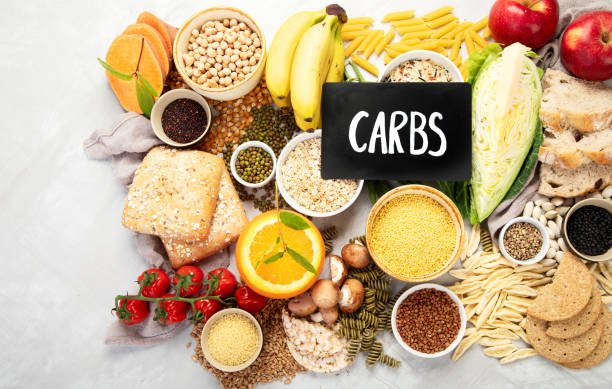
Carbohydrates are fuel for your brain and muscles. They are essential to your diet if you don’t want to feel like a zombie. After subtracting protein and fat from the total calorie count, we allocate all remaining calories to carbohydrates.
Let’s calculate: Our goal is 1,700 kcal.
Protein: 600 kcal
Fat: 630 kcal
Total: 1,230 kcal.
1,700 – 1,230 = 470 kcal left for carbohydrates.
Converting to grams: 1 gram of carbohydrates = 4 calories. 470 / 4 = 117 grams of carbohydrates.
And there we have our personalized plan: 150 g of protein, 70 g of fat, 117 g of carbohydrates.
At first glance, how to count macros for beginners looks like high school math. But this is just a one-time calculation. Now the fun part begins—the game is on.
Step 4: Tools—how to keep track without a headache
I haven’t been using notebooks for about five years. In the age of smartphones, counting by hand is like digging a garden with a shovel when you have a tractor. Here’s my gentleman’s kit for tracking macros.
- Kitchen scales. This isn’t a luxury item, but a must-have item. Beginners’ estimates are disastrously off. Studies show that people tend to underestimate the calorie content of food by 30–50%. Estimating by eye is a recipe for failure. Buy a food scale; it costs about as much as two pizzas, but it will serve you for years.
- Mobile app. I recommend MyFitnessPal, FatSecret, or similar apps. These apps contain a database of thousands of foods. You scan the barcode, search for “cooked buckwheat porridge,” and enter the weight. The app will calculate how much protein, fat, and carbs you’ve eaten.
- Measuring spoons. Use them for oils, sauces, and peanut butter. Oil is a sneaky enemy. One tablespoon of oil (olive or butter) contains 120–150 calories of pure fat. It’s easy to pour “just a little” into the pan and add an extra 300 calories to your daily intake without even noticing.
Step 5: A Practical Strategy — The “Plate” and “Cheat Sheet” Methods
When I first started explaining how to count macros for beginners to my clients, I realized one thing: people are scared. They’re scared of weighing every single crumb, and they’re scared of looking like a control freak in the kitchen.
To relieve this stress, I suggest starting with the “Basic Templates” method. You don’t need to weigh 10 different ingredients in a salad. Just stick to the structure.
“My Ideal Meal” Template:
Imagine your plate divided into three sections: If you assemble your meals using this principle, you’ll automatically get closer to the right macronutrient balance without having to open an app every 5 minutes.
- 1/2 of the plate: Non-starchy vegetables (cucumbers, tomatoes, leafy greens, broccoli, cauliflower, green beans). This is fiber. It adds volume, but is low in calories.
- 1/4 plate: Protein source (chicken, fish, tofu, eggs, cottage cheese, beef). The protein should be about the size of your palm.
- 1/4 plate: Carbohydrate source (buckwheat, rice, quinoa, potatoes, whole-grain bread). This is fuel. If your goal is weight loss, this quarter can be smaller.
- Fats: Add them by hand (a handful of nuts, a spoonful of oil in a salad, an avocado).
Learn with simple foods.
In the first week, keep it simple. Don’t try to count macros for complex stews with 15 ingredients. Eat simple, single-ingredient dishes. At first, learning how to count macros for beginners takes time. But after 2–3 weeks, you’ll develop “muscle memory.” You’ll look at a slice of bread and have a rough idea of how many carbs it contains. You’ll learn to “read” food.
- Breakfast: 3-egg omelet (18 g protein, 15 g fat) + oatmeal cooked in water (50 g dry oats — that’s ~35 g carbs).
- Lunch: Chicken breast (200 g — 46 g protein) + buckwheat (80 g dry — 60 g carbs) + cucumber.
- Dinner: Steamed fish (150 g — 30 g protein) + green beans.
Step 6: A Flexible Approach—Why Restrictions Don’t Work
One of the biggest mistakes beginners make is categorizing foods as “good” and “bad”—”allowed” and “forbidden.” As soon as you eat a slice of pizza, you feel guilty, and the whole day is ruined.
I follow the principle of flexible dieting. There are no “bad” macronutrients. There are simply foods that either fit within your macros or don’t. If you want to eat a hamburger but know you have 40 g of fat and 50 g of carbs left, go ahead and log it in the app. You should eat fewer nuts or oils in your salad at lunch to make room for it.
It relieves psychological stress. Because when you forbid yourself something, your brain starts craving it twice as much. When you allow everything, but within reason, food stops being the enemy.
Step 7: 5 Common Mistakes at the Start
My experience working with people learning to track macros for beginners shows that almost everyone faces the same pitfalls. Let’s go over them so you can cut corners.
Mistake 1: Unaccounted-for calories
You weighed the chicken and buckwheat, but forgot about the oil you used to fry it, the sauce on your plate, or that “one little cookie” with your coffee. These “invisible” calories often add up to 200–400 kcal a day, wiping out your entire calorie deficit.
Solution: Add the oil to the pan before pouring it in.
Mistake 2: Blindly following the rules
You’ve calculated your numbers, but you feel hungry or low on energy. This is normal during the first week, but if it lasts longer, make adjustments. Macros aren’t set in stone. If you’re an active person, you might need more carbs. If protein isn’t filling you up, increase it by cutting back on fats.
Solution: Listen to your body. If you’ve met your macros but your stomach is growling, add more vegetables (fiber) or a little more fat next time, since fat slows stomach emptying and promotes satiety.
Mistake 3: Ignoring micronutrients and water
Focusing on macros, beginners often forget about water and fiber. Macronutrients provide energy, but water is the medium in which all processes take place. If you eat a lot of protein (which is correct) and drink too little water, you’ll end up with constipation and lethargy.
Solution: Drink 30–40 ml of water per kg of body weight. Monitor the color of your urine: it should be straw-yellow.
Mistake 4: An overly aggressive calorie deficit
In an effort to lose weight faster, people cut their calorie intake to 1,200 or less. The body perceives this as starvation. It slows down your metabolism, breaks down muscle, and leaves you in a rebound effect.
Solution: Your calorie deficit shouldn’t exceed 20–25% of your maintenance calories unless you’re severely obese and under a doctor’s supervision. Slow and steady is always faster in the long run.
Mistake 5: Perfectionism
Missed a day? Ate more than usual at a birthday party? Forgot to weigh your dinner? It’s not the end of the world. How to count macros for beginners is a marathon, not a sprint. Each day doesn’t have to be perfect; what matters is the average trend over the week. If you were in a deficit for 6 days and ate pizza on the 7th, you’ll still be in the red for the week.
Step 8: Sample Daily Menu (1,700 kcal, 150/70/117)
Let’s put our calculations into a real meal plan. I’ll specifically choose simple and affordable foods so you can use this as a starting point.
Breakfast (8:00 AM) Lunch (1:00 PM) Snack (5:00 PM) Dinner (8:00 PM) Total for the day:
- Oatmeal (40 g dry): 150 kcal, 5 g protein, 3 g fat, 27 g carbs.
- 2 eggs + 1 egg white (or 3 eggs): 210 kcal, 18 g protein, 15 g fat, 1 g carbohydrates.
- Coffee with 50 ml milk: 25 kcal, 1 g protein, 1 g fat, 2 g carbohydrates.
- Total: 385 kcal, 24 g protein, 19 g fat, 30 g carbohydrates.
- Chicken fillet (180 g cooked): 270 kcal, 45 g protein, 9 g fat, 0 g carbohydrates.
- Buckwheat porridge (60 g dry): 210 kcal, 8 g protein, 2 g fat, 42 g carbohydrates.
- Vegetable salad (cucumber, tomato, greens) with 1 tsp olive oil: 100 kcal, 2 g protein, 9 g fat, 5 g carbs.
- Total: 580 kcal, 55 g protein, 20 g fat, 47 g carbs.
- 5% fat cottage cheese (150 g): 180 kcal, 22 g protein, 8 g fat, 6 g carbohydrates.
- A handful of berries (50 g): 25 kcal, 0.5 g protein, 0 g fat, 6 g carbohydrates.
- Total: 205 kcal, 22.5g protein, 8g fat, 12g carbohydrates.
White fish fillet (pollock/cod) (150 g): 120 kcal, 25 g protein, 3 g fat, 0 g carbohydrates.
Green beans (200 g): 60 kcal, 4 g protein, 0 g fat, 10 g carbs.
Butter (10 g) for the fish: 70 kcal, 0 g protein, 8 g fat, 0 g carbs.
Total: 250 kcal, 29g protein, 11g fat, 10g carbs.
Calories: Is that 1420? No, wait—we counted 1420, but the goal was 1700. We have a 280-calorie buffer! That’s great news.
That means we can add a post-workout protein shake (120 kcal, 25g protein, 1g fat, 2g carbs) or a serving of nuts (20g almonds: 120 kcal, 4g protein, 10g fat, 4g carbs), or enjoy a serving of our favorite fruit.
Can you see how this works? We’re not starving. We’ve met our protein goal (about 150 g) and ended up with a delicious, varied menu. This is the answer to the question of how to count macros for beginners without suffering.
Step 9: Setbacks and Plateaus — How to Stay on Track
About 3–4 weeks after you start tracking, you might hit a plateau—your weight will stall, even though you’re doing everything right. This isn’t your body breaking down. It’s physiology. Your body is adapting.
At times like this, I recommend:
- Double-check your portions. We often start “rounding up”: “Oh, a spoonful of oil—oh well, I won’t write it down.” These “oh wells” add up.
- Add more steps. We often focus only on food, forgetting about NEAT (non-exercise activity). 5,000 extra steps a day can restart the fat-burning process.
- Do a carb refeed. If you’ve been in a calorie deficit for a long time, your leptin (satiety) levels drop. One day, when you increase your carbs to maintenance calories, it can signal to your body that “everything is fine, there’s no hunger,” and the weight will start moving again.
Conclusion: Make tracking a habit
I hope that now you view how to count macros for beginners not as boring math, but as a tool for gaining control over your body. The hardest part is getting started and sticking with it for the first 2–3 weeks. After that, it will become a habit. You’ll stop seeing the scale as an enemy and start seeing it as a helper.
Remember: counting macros isn’t the goal, but a means to an end. The goal is your health, energy, and a reflection in the mirror that makes you feel good. Be flexible. If you didn’t hit your targets today—no big deal. Tomorrow is a new day.
Start small. Don’t try to change everything at once. To begin with, buy a scale and download the app. Next week—start weighing and recording everything you eat, without changing your diet yet. You’ll be surprised by what the stats show. Then, armed with the calculations from steps 2 and 3, gradually adjust your diet to meet your goals.
In a month, you’ll know more about your body and food than 90% of the people around you. You’ll stop fearing carbs and blaming fats for everything. You’ll manage your nutrition the way an experienced captain steers a ship.
And if you still have questions about how to count macros for beginners in your specific case, remember the golden rule: listen to your body. The numbers are just a starting point, but how you feel is the main indicator of whether you’re on the right track. Good luck!
Want this article to read in pdf later?
Enter your Email Address to get this article in pdf format