
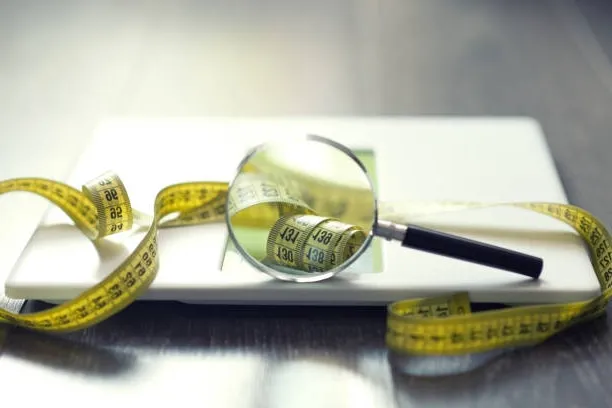
Discover 10 accurate tracking methods beyond the scale that reveal true body progress—from body measurements and strength gains to energy levels and blood biomarkers. Stop letting daily weigh-ins ruin your mood and learn how to measure fat loss, muscle gain, and real health improvements without obsessing over a single number.
I remember my first attempt at “serious weight loss.” Every morning began with a ritual: taking off all my clothes, taking a deep breath, and stepping onto the cold plastic platform of the scale. The numbers on the display set my mood for the entire day. If the scale showed a loss, it was a beautiful day. If it showed a gain or no change, the day was as good as ruined.
Does this sound familiar?
I spent years letting a little electronic device control my self-esteem. But here’s what I realized after becoming a fitness and nutrition expert: the scale is just one—and a rather superficial—tool in a huge toolbox. It measures only your interaction with gravity, but doesn’t reflect the full complexity of the changes happening in your body.
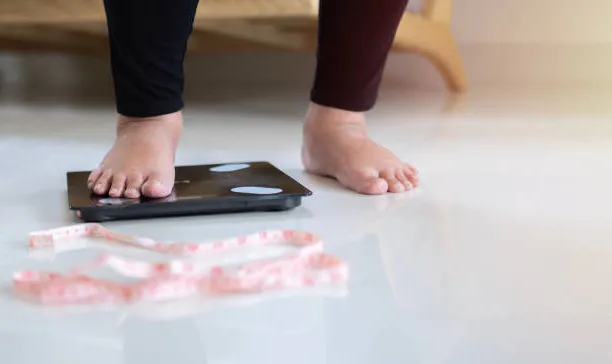
If you’re ready to move beyond this “see-saw” relationship with the scale and find true freedom on your journey to health, it’s time to master tracking methods beyond the scale. These tools not only provide a more accurate picture of your progress but also save you from frustration when the math on the scale seems to stop working.
In this article, we’ll explore 10 ways to track the changes that really matter. Trust me, once you start looking at these metrics, you’ll wonder why you let the numbers on the scale ruin your mood for so long.
Table of Contents
Why the Scale Is a Bad Main Character

Before we dive into the alternatives, let’s figure out why the scale so often lets us down. Imagine trying to assess a country’s budget by simply weighing all the printed money. Absurd, right?
Our bodies are 60–70% composed of water. This water is constantly in motion. Did you eat salty food for dinner? Then your body will retain water. In women, the menstrual cycle causes hormonal fluctuations that can add 1 to 3 kilograms of water weight literally overnight. Have you started a new workout program? Your muscles, sustaining micro-injuries for growth, retain fluid to recover.
Additionally, muscle is denser than fat. You can become leaner, lose inches, but stay at the same weight or even gain a little. If you judge your success solely by the number on the scale, you are at risk of giving up halfway through, without seeing the main result.
That is why modern methods of tracking beyond the scale are not just a “nice bonus,” but a necessity for long-term success. They help you see the big picture, rather than just a single pixel on it.
1.Take measurements: the story of your body composition
This is my absolute favorite and most underrated method. If you want to see real transformation, buy a tailor’s tape measure. It costs next to nothing, but provides information that is priceless.
Every two weeks, at the same time of day (preferably in the morning on an empty stomach), measure:
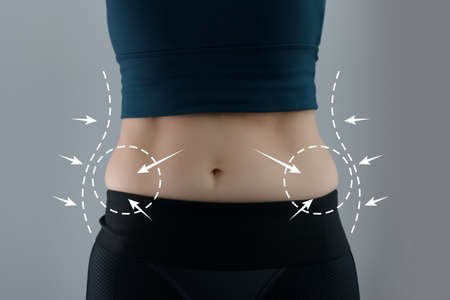
Why does this work better than a scale? Because the tape measure shows how your body composition is changing. You might be losing fat around your waist but gaining muscle in your legs. The scale will show “zero,” but the tape measure will say, “Hey, your waist has shrunk by 3 cm!” That’s a win.
- Chest circumference (at the most prominent points).
- Waist (the narrowest point or the area around the navel).
- Hips (the widest part).
- Each hip separately (if you want to monitor your symmetry).
I often compare it to a roll of paper towels. At the beginning of the journey, when the roll is full, removing a few sheets (centimeters) is almost imperceptible. But the closer you get to the finish line (your goal), the more every centimeter becomes a huge achievement. Record the numbers.
Keep a chart. This is one of the most reliable methods of tracking progress beyond the scale, proving that you’re moving forward.
2. How Your Clothes Fit: The “Favorite Jeans” Test
Forget about size tags for a moment. The fashion industry is so inconsistent that a size S from one brand might be equivalent to an M from another one.
Instead, find a pair of jeans or a dress that fits you snugly but isn’t too tight. Put them on today. Make a mental note—or even take a photo—of how the button holds up.
Then repeat this ritual in a month. Don’t focus on whether you “fit” into them, but on the quality of the fit. Are they looser around the hips? Is there less of a fold hanging over the waistband? Is the zipper easier to fasten?
Clothes don’t lie. Clothes don’t react to water retention the way a scale does. If your jeans feel looser, it means your body has truly changed. This is a very tactile and emotional method. Every time you button up your favorite jeans with a couple of centimeters to spare, you get a powerful dose of motivation that no scale can provide.
3. Strength and Endurance: Silent Witnesses to Progress
Remember when you first started working out? Maybe you could do 10 bodyweight squats and felt like your heart was about to jump out of your chest. And what about today?
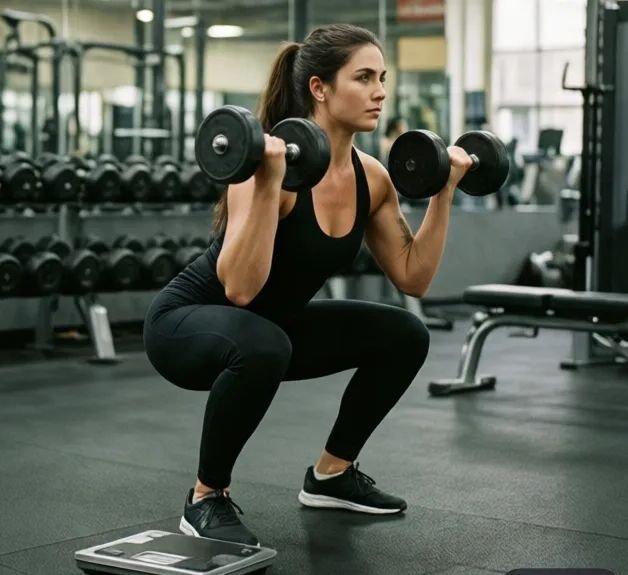
Tracking physical metrics is the gold standard for tracking methods beyond the scale. Keep a workout journal. Write down: When I started lifting weights, I stopped weighing myself completely. My weight stayed the same for six months, but during that time I increased my working weight in squats from 20 kg to 55 kg. Tell me I haven’t gotten healthier and leaner? My body has become firm and toned, and I no longer get out of breath on the third floor. Strength is the best indicator that muscles are growing and metabolism is speeding up.
- What weight do you use for deadlifts or squats?
How many reps can you do without stopping?
How has your cardio time changed (you used to run 2 km in 15 minutes, now in 13)?
How quickly does your breathing recover after a set?
If you’re getting stronger, you’re getting better. Period.
4. Energy and Sleep: How Do You Wake Up?
Let’s be honest. The goal of any weight loss or health improvement isn’t just a number on the scale, but your quality of life. That’s why one of the most honest ways to track progress beyond the scale is your energy level.
Keep a simple daily wellness journal. On a scale of 1 to 10, rate: Proper nutrition and adequate exercise should boost your energy, not drain it. If you’ve noticed that you’re waking up before your alarm feeling refreshed rather than exhausted—that’s a huge success. It means your hormonal system has found balance, and your diet truly suits your body.
- How do you sleep? Do you wake up at night?
- How easily do you get up in the morning?
- Do you feel “foggy” in the head after lunch?
- Do you have the energy for hobbies after work, or do you have no energy left?
I often see people who lose weight “at any cost,” living on nothing but kefir and cucumbers. Yes, the scale shows a lower number, but their bodies are broken, angry, and unable to function properly. What’s the point of that? Real progress is when you become more energetic, not more exhausted.
5. Visual reinforcement: the power of photos
The brain is an amazing organ. It tends to adapt. We look in the mirror every day and don’t notice changes because they happen gradually. What we see every day seems “normal” to us.
Photos shatter this illusion. This is one of the most powerful tracking methods beyond the scale because it’s visual and unbiased.
How to do it right: Make a “Before” and “After” collage. Sometimes the difference is so shocking that people can’t believe their eyes. Where the scale stubbornly shows a “plateau,” photos demonstrate how the swelling has gone down, the skin has tightened, and the waistline has emerged. Don’t be lazy about doing this. It’s the best argument against your inner critic.
- Do it right now. Don’t wait for “Monday” or “5 kg down.” Take a photo today.
- Conditions: The same location, the same lighting, the same form-fitting clothing (a swimsuit or a top with cycling shorts). A neutral background is best.
- Angles: Photos from the front, side, and back. Arms extended straight or slightly bent to show your muscles.
- Frequency: Once every 3–4 weeks.
6. Analyzing Eating Habits: Look Deeper
True transformation doesn’t start in the gym—it starts in your mind. That’s why I believe tracking changes in your relationship with food is a critically important tracking method beyond the scale.
Ask yourself honest questions once a month: Remember: changing your eating habits is a process similar to tending a garden. Weeds (bad habits) don’t disappear overnight. But if you notice that you’re choosing vegetables over fast food more often, or have stopped mindlessly snacking in front of the TV—you’ve won the main battle. And the scale won’t show these victories.
- Have I stopped using sweets to cope with stress?
- Can I leave half a serving on my plate if I’m full, without feeling anxious?
- Have I started choosing food based on what my body wants, rather than on an emotional impulse?
- Has the number of “slip-ups” decreased? If I used to have a slip-up once a week, and now it’s once a month—that’s progress!
7. Bioimpedance Analysis: Science on Your Side
If you want to look inside yourself and stop guessing what exactly is happening to your body, turn to a professional body composition analysis. This isn’t just a “smart scale” from an electronics store (though they give a rough idea), but clinical tracking methods beyond the scale.
Bioimpedance analysis is a procedure that shows: Why does this change your mindset? Because you see the truth. Imagine: you’ve been working out for a month, but your weight hasn’t budged. You’re in a panic. You go for an analysis, and it shows: you’ve gained 1.5 kg of muscle and lost 2 kg of fat. Your weight is the same, but you’ve become better. Get this analysis done every 2–3 months. It’s the most accurate compass on the path to a healthy body.
- Percentage of body fat.
- Muscle mass percentage.
- Visceral fat level (internal fat around the organs).
- Hydration level (body water content).
- Metabolic rate (basal calorie level).
8. Waist circumference and waist-to-hip ratio
This point deserves special attention because it is a medical marker of health. Even if you’re not chasing six-pack abs, monitoring your waist circumference is vital.
Medicine considers a waist circumference of over 80 cm in women and 94 cm in men to be a risk factor for cardiovascular disease and type 2 diabetes.
That’s why one of the most important tracking methods beyond just weighing yourself is a measuring tape around your waist. But let’s take it a step further. Calculate your waist-to-hip ratio (divide your waist circumference by your hip circumference).
For women, the ideal ratio is less than 0.85; for men, less than 0.90.
A decrease in this ratio means you’re not just losing weight, but losing dangerous fat. You’re becoming healthier from the inside out. The strain on your heart, liver, and joints decreases. You have to admit, this is a much deeper goal than simply “I want to fit into that dress” (though that’s nice too).
9. Stress Levels and Mental Well-being
I want to discuss a sensitive topic. Sometimes, the path to a healthy body turns into a source of chronic stress. We start to hate our bodies, berate ourselves for every bite, and weigh ourselves five times a day.
So, when assessing your progress, ask yourself: “Am I feeling calmer?”
Use tracking methods beyond the scale, such as a mood journal. Note how often you feel proud of yourself rather than ashamed. How often do you catch yourself looking forward to a workout instead of dreading it like a chore?
If you’ve become kinder to yourself, stopped fearing mirrors, and learned to enjoy movement—you’ve achieved what many can’t achieve in years. And the scale isn’t your ally here. Mental and emotional health is the foundation. If the foundation is strong, a beautiful body is just a matter of time.
10. Health Biomarkers: Blood and Tests
This is perhaps the most underrated category among those who are losing weight for “beach season.” We want to look good on the outside so much that we forget to check what’s going on inside. But true beauty begins with a healthy internal environment.
Routine tracking methods beyond the scale should include monitoring key blood markers: Get tested before you start and again after 3–4 months. When you see that your blood has become “younger” and healthier, you’ll realize it’s worth the effort. The scale can be deceiving due to water retention, but blood tests are objective reality.
- Fasting glucose and insulin: these show how sensitive your body is to insulin. A decrease in these levels is a huge victory, even if your weight remains the same.
- Lipid profile (cholesterol, LDL, HDL, triglycerides): An improvement in these indicators suggests that your diet is helping to cleanse your blood vessels.
- Vitamin D and ferritin: Energy levels and immunity.
How to bring it all together into a single system
Now that we have an arsenal of 10 powerful tools, the question arises: how do we avoid getting lost in these numbers and observations? I recommend creating a simple system.
You don’t need to measure everything every morning. That will cause information overload and anxiety. It’s better to spread it out: Keep a spreadsheet in Google Sheets or use special apps where you can upload photos and notes.
- Weekly: Track your subjective feelings (energy, sleep). You can measure your waist once a week, but not more often, so you don’t get fixated on it.
- Every 2 weeks: Full body measurements (chest, waist, hips, legs, arms). Photos.
- Once a month: The jeans test. Strength assessment (training progress).
- Every 3–4 months: Bioimpedance analysis and routine blood tests.
The main point I want to make is this: you are not just a number on the scale. You are a complex, beautiful system. And when you start using comprehensive tracking methods beyond the scale, you stop being a hostage to momentary fluctuations caused by water retention or that pickle you ate yesterday.
You start to see progress where you once saw only stagnation. You notice how climbing stairs becomes easier, how your shoulders straighten, how your complexion improves. You shift your focus from “losing weight at any cost” to “becoming a healthier version of yourself.”
Conclusion: Freedom from the Dictatorship of the Scale
Remember that girl from the beginning of the article who woke up depending on the numbers on the scale? Now I can say with confidence that I’ve finally stopped being her.
I haven’t weighed myself in over two years. And during that time, I’ve become slimmer, stronger, and happier than ever. I focus on how my jeans fit, how many push-ups I can do, how I look in photos, and, most importantly, how peacefully I sleep at night.
Your body isn’t a project to maintain a certain number. It’s your home. And you deserve to live in a home you love, not fear.
Start today. Put the scale away in a drawer. Grab a tape measure, take your first photo, and write down how you feel. Promise yourself that the next time you assess your progress, you’ll look at everything listed above.
Because true transformation always happens where the scale is powerless. It happens in your habits, in your strength, in your reflection in the mirror, and in the way you laugh.
Now it’s your turn. Which of these methods for tracking progress beyond the scale will you try first? Share in the comments—I’d love to support you on this journey!
Want this article to read in pdf later?
Enter your Email Address to get this article in pdf format