

Let’s start with a sincere question: Can I lose weight without dieting?This is the most frequently asked question by people who had enough of all kinds of prohibitions. So, if you are reading this article right now, you must have tried calculating calories, refusing yourself from dinner, or consuming green and spicy-smelling smoothies. And probably, you got a result that lasted only for a while or made you feel such shame that you couldn’t help eating a chocolate cake.
No, I am not a nutritional expert in white clothes, I am a content writer dealing with health-related topics who has suffered through various stages of agony and come up with one crucial conclusion: it is absolutely possible to lose weight without diets and it is the only option to get rid of extra pounds once and forever.
A diet lasts exactly until the moment you come back to your normal routine. The moment you stop torturing yourself, your organism starts its revenge. But what if I tell you that the secret of becoming slim lies not in willpower, but in science? Let’s find out how we can lose weight without torturing our bodies.
Table of Contents
Why diets are a trap we fall into again and again.
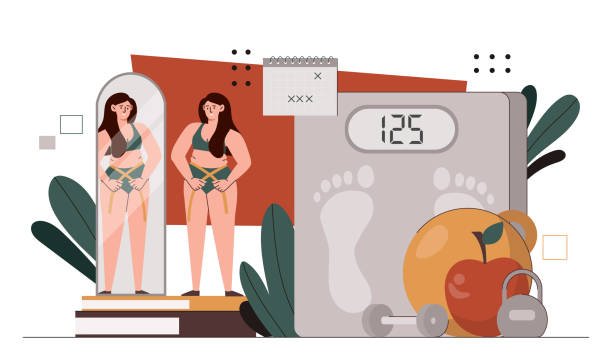
Let me first explain the mechanism that prevents regular diets from being effective. Comparing diets to building a dam on a river, you heroically resist the power of water (hunger). However, the pressure increases, and eventually, you are drowned by the wave of irresistible desire.
In case of drastic caloric restriction, the organism does not perceive your intention to fit into your favorite jeans. Your body thinks that a period of famine has started, which activates a survival system that slows down the metabolic processes and increases the level of the stress hormone (cortisol).
The situation often occurs when a person celebrates losing 5 kilograms after a month of dieting. However, he or she does not notice that among the 5 lost kilograms, there are 3 kilograms of muscle mass and water.
Muscles are our mini-calories burning machines that help to burn extra calories even in the process of sleep. When you start eating your usual food again after a diet, your metabolism is slower, which results in the so-called yo-yo effect.
Therefore, since diets do not work anymore, let me offer another approach.
A Paradigm Shift: From Restriction to Signal Management.
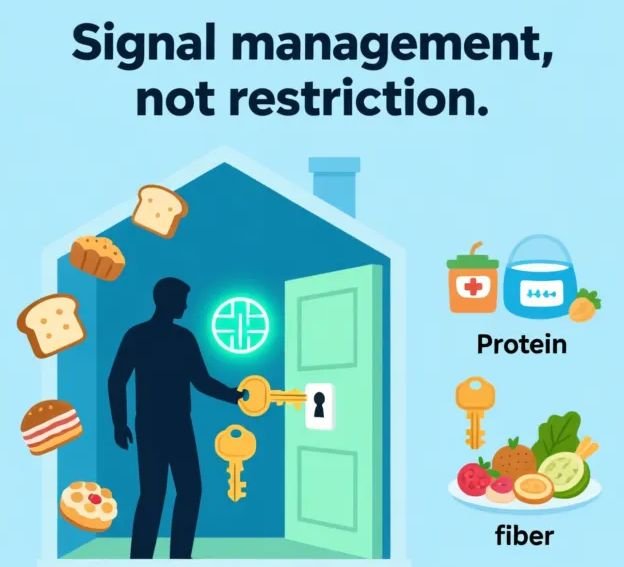
In order to be slim and beautiful and not to follow diets, first of all, you should stop thinking about food as an enemy. Of course, it sounds like hyperbole, but in fact, we speak about physiology only. Our weight is controlled by many other signals except for calories intake minus calories spent.
Let us make an analogy here. Your body is a kind of smart house which stops working well when the circuit breaker is turned off constantly as far as there is some extra illumination. In other words, diets affect hormonal signals which become damaged.
I will tell you the details. Insulin is a hormone that helps to reduce sugar in the blood and bring it to the cells. However, if the intake of carbohydrates is rather frequent and excessive (for instance, rolls and pastries), then cells stop responding to insulin. As a result, high insulin stays constantly in your blood. It is like an order – “Fat deposits must be stored; fat must not be burnt at any rate.”
This means that it is possible to get fat following a low-fat but “light” carbohydrate diet. The only thing needed is to lower insulin load without being hungry.
What Works Instead of Diets: 5 Pillars of Slimness
So, returning to our main question: Can I lose weight without dieting? The answer is yes, if you stop looking for a “magic pill” and start building a system. I’ve identified five basic principles for myself and my readers that work like clockwork.
1. Protein: Your Best Friend in the Fight Against Hunger.
If you remember only this one thing from everything I say, that will be enough. Protein is a macronutrient that radically changes the biochemistry of satiety. When you eat enough protein (meat, fish, eggs, cottage cheese), your body produces satiety hormones (PYY and GLP-1), which send a clear signal to the brain: “We’re full, turn off the hunger.”
I recommend to my friends who ask me how to lose weight without dieting that they start with breakfast. If your breakfast is coffee with cookies or sweet porridge made with water, you’re setting yourself up for a sugar roller coaster. An hour later, your glucose levels will drop suddenly, and you’ll feel ravenous and irritable.
Replace that with scrambled eggs with vegetables or a protein omelet. Try it for a week. You’ll notice that your cravings for snacks will disappear on their own. It’s not willpower—it’s your hormones working for you.
2. Fiber as a way to trick your stomach.
The second building block for a slim figure is fiber. I call it both a “broom” and a “filler.” Dietary fiber is the part of plant-based foods that we don’t digest. But it does two important things: How can you add fiber without forcing yourself? You don’t need to switch to a buckwheat-only diet. Just add a handful of spinach to your scrambled eggs, swap white rice for brown rice or quinoa, or eat a plate of vegetables before your main course. This naturally reduces the overall calorie count of your meal.
- It creates volume. The stomach reacts to stretching. If you eat 300 calories of chocolate, your stomach will remain empty, and you won’t feel full. If you eat 300 calories of broccoli with chicken, the volume of food will be substantial, and the stretch receptors will signal to your brain: “We’re full.”
- Feeds your microbiota. A healthy gut is the key to a healthy weight. The bacteria that live inside us influence how many calories we extract from food and how much we want to eat.
3. Fats are not enemies, but fuel.
Phobia from fats – one more thing to thank for the 90s. Food producers capitalized on the public fear of fats by developing “low-fat” foods enriched with sugar for taste.
In order to lose weight without following diets, you have to include fats into your nutrition system. I mean only healthy fats: olive oil, avocados, nuts, oily fishes (like salmon, mackerel) and eggs. Why do you have to do this? Fats spend the longest time digesting and thus don’t give an insulin rush.
Furthermore, fat soluble vitamins A, D, E, K will be absorbed by your body only if there is fat in your food. Without olive oil or similar ingredients your body doesn’t have the fuel needed for metabolic processes, just like in the case of making a fire – you have all the matchsticks, but where is the fuel?
4. Meal eating order: a small life hack with a big impact.
What is the difference between people who are able to lose their excess weight without having a diet and others who find it hard to do so? Well, it might be as simple as arranging your meals. Research says that the mere change in one’s dietary intake routine could result in less fluctuation of the level of blood sugar.
The method that works for me personally includes the following rule: if you eat the foods high in fiber and protein first, they would decrease the rate at which glucose is absorbed by the body from other foods. You would still feel energetic due to carbohydrates while avoiding that rush of insulin responsible for accumulation of fat.
- Start with vegetables (fiber). They create a protective barrier in the gut.
- Then protein and fats. The main part of your plate.
- Last—carbohydrates. Whether it’s potatoes, pasta, or bread.
5. Sleep and Stress: The Things Diets Overlook.
This is precisely where people fall flat on their faces. It doesn’t matter if you eat right, but you sleep five hours per night and work under constant stress. Then you simply will not lose weight without a diet (or even with it).
Why? Take cortisol for example. If there is insufficient sleep and stress, then cortisol is released excessively. And what does cortisol say to the body? “Warning! You have to store energy in the abdominal area.” Furthermore, sleep deficiency decreases the sensitivity to leptin, a hormone responsible for satiety. This is why one does not have a feeling of satiation, even after having consumed a whole ox.
“I want to lose weight, but I’m working overtime, arguing with family members, and sleepless nights are becoming my routine. Am I doing anything wrong here?” — this is one of the questions I pose to my clients. In this situation, one should begin not in the kitchen, but in bed. Sleep is an anabolic process when the body restores itself and loses fat.
Practical Experiment: 30 Days Without Diets.
Let’s move from theory to practice. I propose a mental experiment. Forget the word “diet” for a month. Instead, focus on adding, not removing. We’re used to thinking, “What should I cut out to lose weight?” Change the question: “What should I add to become healthier?”
If you’re still unsure whether you can lose weight without dieting, try this simple system for 30 days. It doesn’t require weighing every crumb.
Week 1: The Basics.
This week, we’re focusing solely on hydration and protein.
- Rule: Drink a glass of water 20 minutes before every meal. We often confuse thirst with hunger.
- Rule: Every meal must contain a source of protein. Breakfast: 2 eggs. Lunch: chicken breast or fish. Dinner: cottage cheese or meat. Don’t limit yourself to portion size; make sure there’s protein on your plate.
- No: No “liquid calories.” Cut out sweet sodas, packaged juices, and coffee with syrups for a month.
Week 2: Vegetables and Organization.
We’ve established protein; now we’re adding fiber.
- Rule: “The Plate Rule.” Mentally divide your plate in half. Fill one half with vegetables (any kind, except potatoes). Divide the other half again: one-quarter — protein, one-quarter — complex carbohydrates (buckwheat, brown rice, sweet potatoes).
- Rule: Follow the order of eating. First vegetables, then protein, then carbohydrates. This requires mindfulness, but it quickly becomes a habit.
Week 3: Mindfulness and Pauses.
The hardest part is to stop eating on autopilot in front of the TV.
- Practice: Eat the first 5 minutes of your meal in complete silence. Focus on the taste. Chew slowly. Put your fork down on the table between bites.
- Why it works: The signal that you’re full reaches your brain with a 20-minute delay. If you eat quickly, you consume 20–30% more than you need. Just by slowing down, you create a natural calorie deficit without counting.
Week 4: Sleep and Stress Management.
- Ritual: Put away your gadgets an hour before bed. Darkness and cool temperatures in the bedroom help produce melatonin, which is directly linked to metabolism.
- Walk: Add a 20-minute walk after dinner. This isn’t “exercise for weight loss”; it’s a way to lower cortisol levels after a workday and improve insulin sensitivity.
Busting Myths: What’s Holding You Back.
Why do so many people, even though they know these principles, keep looking for strict diets and think, “No, I can’t lose weight without a diet; I need a strict plan”? Because uncertainty scares us. A diet gives the illusion of control: “I can only eat this one lettuce leaf.”
But let’s break down the most common fears.
Myth 1: “To lose weight, you have to starve yourself.”
No. Starvation slows down your metabolism. To lose weight without dieting, you need to eat enough so that your body isn’t afraid to burn fat. If you feed your body high-quality fuel, it’s more willing to tap into its fat stores.
Myth 2: “I can’t give up sweets.”
And you don’t have to give them up completely. Forbidden fruit is sweet. If you ban sugar, you’ll end up binging. The strategy is to first stabilize your blood sugar with protein and fiber. When your glucose levels are stable, the craving for sweets disappears on its own, as if someone flipped a switch. You stop craving cookies not because you have an iron will, but because your brain no longer demands an emergency dose of dopamine.
Myth 3: “You have to work out until you’re drenched in sweat.”
Physical activity is great, but it doesn’t make up for poor nutrition. If you exhaust yourself with cardio to “burn off” the cake you ate, you’re creating chronic stress. For sustainable weight loss without dieting, walking and basic strength training are enough. Our muscles are essential as energy consumers. But building them is easier when you eat well, not when you starve yourself.
Expert Opinion and Science.
Do not treat the above information as my own subjective position. Current scientific evidence proves that the strategy of “no diet” is completely correct. In fact, research proves that sustainable weight loss occurs due to behavioral changes, including changes in diet quality.
For example, well-known scientist Dr. Jason Fung, who specializes in nephrology and metabolic conditions, states that “you do not gain fat because you eat a lot. You eat a lot because you are gaining fat.”
As you understand, hormonal disorder (high insulin level) leads to cellular starvation and makes you search for food.
That means, when you lower insulin through eliminating snacks and including certain foods, you address the cause rather than the consequence. Just like when you fix a leakage and not its results.
In addition, it is vital to remember the psychological aspect. As you know, psychologists-dietitians state that restrictive diets cause eating disorders. Talking about “weight loss without diet,” we learn to listen to ourselves.
It’s necessary to distinguish between physiological (hunger) and psychological (boredom, depression) needs.
Where should you start today?
I realize there’s a lot of information here, and it might feel like this is harder than just going on a buckwheat diet. But let’s be honest: a buckwheat diet works for two weeks. The strategy I’m describing, however, works for years.
If you’re still asking yourself, “Can I lose weight without dieting?”, ask yourself this instead: “Can I stay on a diet for the rest of my life?” If the answer is no, then the only way forward is to change your approach.
Here’s your action plan for today, starting right now:
- Get rid of weighing yourself. Not literally, but stop weighing yourself every day. Your weight fluctuates due to water retention, salt intake, and your cycle. Focus on how you feel and how your clothes fit.
- Take a look inside your fridge. Find “low-fat” foods and replace them with full-fat ones. 0% fat yogurt is often loaded with sugar. Choose regular 3-5% fat yogurt without additives.
- Organize your environment. Remove cookies and candy from the table. If sweets aren’t in plain sight, you’ll eat 50% less of them. That isn’t a diet; it’s environmental management.
- Plan your protein. Stock up for the week: eggs, chicken breast, fish, tofu, or cottage cheese. When you have a protein option on hand, the likelihood of giving in to fast food drops significantly.
Conclusion: Your body is not your enemy.
In conclusion, let us go back to our very first point. Can I lose weight without dieting? The answer lies in an assumption that your body is lazy and deceptive and needs strict training. However, it’s nothing but a myth.
The body is an absolutely incredible mechanism striving for balance. Just cut down processed products and supply your organism with high-quality proteins, fibers, fats, water, and sleep, and your body will get back its balance.
It’s hard to imagine that losing weight without any diets is some kind of magic. On the contrary, it’s the return of your organism to natural physiological processes which need your careful attitude but not suffering.
Eat delicious food, feel full of energy and see how the excess inches will disappear from your waist because you stopped fighting your organism and started supporting it in this noble struggle.
Make a step today – take one of five principles mentioned above and try to practice it this week. Make no dramatic steps at once; remember that slow changes are permanent.
And when somebody will ask you about diets, you will be able to say: “No, I only changed my eating style. And it’s working perfectly!”
Want this article to read in pdf later?
Enter your Email Address to get this article in pdf format