

Water weight vs fat how to tell the difference.Have you ever started the week with the perfect diet, drinking liters of water, eating celery, and feeling like a healthy lifestyle superhero, but then stepped on the scale on Friday morning with your heart in your mouth… only to see that the needle hasn’t moved a single gram? Or it went up.
Sounds familiar?
At that moment, you want to smash the scale with a sledgehammer and go eat pizza because “nothing works.” But let’s stop for a second and think. Did you really gain fat overnight? Is your body really such an efficient factory for producing extra pounds that it can build them from a single cucumber in 8 hours of sleep?
Of course not.
Most likely, you’ve fallen into the classic trap for dieters — water retention. Understanding the difference between water weight and fat weight is not just an interesting fact.
It is the foundation on which an adequate attitude towards your body and the process of losing weight is built. In this article, we will take a detailed look at the weight of water and fat: how to tell the difference, why you may feel “bloated” even though you are slim, and how to stop fighting with the bathroom scales, finally.
Get ready:
We’re diving into anatomy, physiology, and the magic of numbers.
Table of Contents
Chapter 1: Two different universes inside us
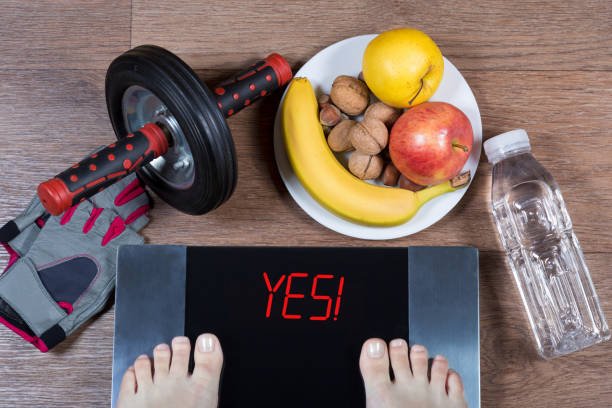
First, let’s clearly separate these concepts. Fat and water in our bodies are like oil and water in real life (pardon the pun). They mix, but they perform radically different functions.
Adipose tissue (lipids)
Imagine that fat is your strategic energy storage. In ancient times, when food was scarce and mammoths ran fast, those who knew how to store calories for future use survived. Fat is concentrated energy. One gram of fat provides about 9 calories. It is light but very dense.
Fat is found in so-called adipocytes (fat cells). When you gain weight, these cells increase in size, like balloons, filling with lipids. When you lose weight, they “deflate,” but the cells themselves do not disappear (which explains the yo-yo effect). We need fat for thermal insulation, organ protection, and hormonal balance.
Water (hydration)
Water is the medium in which all life takes place.
Our bodies are about 50-70% water (the percentage depends on age, gender, and body type). Water is everywhere: in our blood, lymph, muscles, and brain.
Water is not stored like fat. It constantly circulates, is filtered by the kidneys, and is excreted through sweat and breath. We must constantly replenish our water reserves.
But sometimes the body decides: “Stop! Alarm! We need to retain moisture!” And water accumulates in the intercellular space. This is the very swelling that adds extra pounds to the scale.
The main difference: Awareness of this difference in speed is the first step in understanding how to distinguish water weight from fat.
- Fat accumulates slowly (it takes weeks and months of overeating) and goes away slowly (calorie deficit).
- Water comes quickly (overnight due to a salty dinner) and goes away quickly (after a workout or a carbohydrate-free day).
Chapter 2: Why is water your scales’ worst enemy?
You’ve probably noticed that your weight can fluctuate by 1-2 kilograms during the day or even overnight. It’s not that you’re growing or losing weight. It’s water playing hide and seek with you.
Here are the main reasons why the body decides to cause a “flood” and retain fluid:
- Salt (sodium). It is the main culprit. Sodium is an electrolyte that is necessary for nerve conduction and muscle function. But modern people consume many times more salt than is normal. Salt acts like a sponge: one sodium molecule holds many water molecules around it. Did you eat a bag of chips or salty fish at night? Get ready for your body to dilute this salt with water to reduce its concentration and not harm your kidneys. The next morning, you will see an extra 1-1.5 kg on the scales and a swollen face in the mirror. Is it fat? No, it’s water.
Carbohydrates. Here’s where many people are in for a surprise. Carbohydrates (especially in the form of glycogen) are stored in the muscles and liver, bound to water. For each molecule of glycogen, the body stores about 3-4 molecules of water. When you go on a low-carb diet (keto or simply “no carbs”), you first deplete your glycogen stores.
- Along with it, water is also lost. That is why people lose 3-5 kg in the first week of such a diet. They think that fat is melting away at the speed of light. In fact, it is water that is gone. As soon as you eat a piece of bread or a banana, glycogen will be restored, water will return, and the scales will show a weight gain.
- Hormonal background (especially in women). That is the most unfair reason. The cycle directly affects fluid retention. In the second phase of the cycle (after ovulation), progesterone levels rise, which promotes the accumulation of water and sodium. Gaining 1-2 kg a couple of days before your period is absolutely normal. This is not the fat that you have gained from eating ice cream. It is a physiological feature that will go away on its own with the start of your cycle.
- Dehydration. Paradoxical, but true: if you drink little water, your body begins to store it in a panic. The body thinks, “Help, drought! Switch to economy mode!” It retains every drop. If you want to get rid of edema, drink more clean water. It will flush your kidneys and signal to your body that there is no need to panic and that water can be excreted.
- Stress and cortisol. Chronic stress increases cortisol levels. Cortisol, in turn, stimulates the production of antidiuretic hormone (ADH), which causes the kidneys to reabsorb (suck back) water. If you are stressed at work, you will experience swelling at home.
- Lack of movement. Unlike the circulatory system, the lymphatic system does not have its own “pump” — the heart. Lymph moves thanks to muscle contractions. If you sit all day, lymph stagnates, like water in a swamp. It leads to swelling in the legs by the evening.
Chapter 3: How to distinguish water weight from fat weight? Symptoms and tests
So, how can you tell if you have gained water weight rather than fat? There are several sure signs.
Signs of excess water (edema): Signs of fat: Expert opinion:
- “Float effect.” Edema is visually noticeable. The most common places are the face in the morning (especially the eyelids and under-eye area), fingers (your wedding ring suddenly feels tight), ankles, and shins in the evening.
- The dent test. Press your finger on the suspected site of edema (for example, on the shin) and hold for a few seconds. Remove your finger. If a dent remains that does not disappear immediately but slowly flattens out, it is edema. It is water.
- Suddenness. Yesterday you were at your normal weight, and today you are 1.5 kg heavier. You couldn’t have eaten 10,000 extra calories in a day to gain a kilo and a half of fat. To gain that amount of fat, you would need to consume 10-12 thousand calories above your normal intake. That’s unrealistic. So it must be water.
- Fluctuations throughout the day. You got up in the morning — your weight was the same (minimum). You walked around, ate something salty, and had lunch — your weight increased by the evening. Went to the bathroom, sweated in the gym — weight dropped. Such “swings” during the day are pure water.
- Softness. When water is retained, tissues appear soft, pasty (doughy), as if they are filled with fluid.
- Graduality. Fat accumulates imperceptibly. Your jeans have become a little tighter, but you didn’t notice when it happened. Plus 2 kg per month — most likely, it’s fat (or a mixture of fat and water, but the trend is obvious).
- Density. Fat tissue feels denser and more elastic to the touch (unless it is visceral fat deep inside). It does not leave a dent when you press on it (well, except for cellulite, but that’s a different story).
- Localization. Fat has its “favorite” places: in men, it’s the belly (beer belly), and in women, it’s the sides, thighs, and waist (problem areas). Water, on the other hand, is distributed more evenly, creating a general “bloated” appearance.
Dr. Colin Campbell, nutritionist: “The biggest mistake my clients make is to evaluate their progress solely by weighing themselves in the morning. I always ask them to focus on how they feel, measurements with a tape measure, and how their clothes fit. If the waist size decreases but the weight stays the same, it’s a win (fat is burning, but water is retained after training). If the weight drops but the measurements stay the same, it’s a loss of water and muscle, which is bad.”
Chapter 4: Analogy with a Balloon and a Bucket of Water
To finally fix our understanding of the topic “the weight of water and fat: how to tell the difference,” let’s use some visual images.
Imagine that your body is a room. And excess weight is the things that clutter up the room. Or another analogy: an aquarium.
- Fat is dense, heavy boxes of books.
- It takes time to fill a room with boxes. You have to get them somewhere, bring them in, and put them down. They take up a lot of space, but if you start taking them out, the process will be slow. You will have to carry them out one box at a time, burning a lot of energy. One box (a kilogram of fat) is a lot of “fuel” (calories).
- Water is like balloons filled with water scattered across the floor.
- They appear instantly — you sneeze, and a dozen pop up. They take up space and make the room look cluttered, but they are light and can be popped in a second. To remove the water, pierce the balloon with a needle (drink diuretic tea, go to the bathhouse, reduce salt intake).
There is soil at the bottom of the aquarium (fat) and water (actually, water). The soil at the bottom accumulates slowly, grain by grain. To remove it, you need to restart the aquarium. And the water level can fluctuate every day — moisture evaporated, you poured water on top, added decor.
Your body is that very aquarium. When you see that the water level has risen (your weight has increased), don’t rush to think that there is more sediment at the bottom.
Chapter 5: Why aren’t you losing weight even though you’re doing everything right? (Practical cases)
Let’s look at a few typical situations to reinforce the theory in practice.
Case 1. “The first week of the diet — the wow effect”
Situation: Maria went on a strict diet. In the first week, she lost 3 kg. She is happy and writes on social media that she has found the perfect method.
Reality: Maria eliminated sweets and flour. She drastically reduced her carbohydrate and calorie intake. The glycogen in her liver was depleted, and the water that was bound to it was lost. In addition, the diet was low in salt — the salt was gone, and so was the water. Maria lost a maximum of 300-500 grams of fat. The rest was water. As soon as she eats cake at her friend’s birthday party, the water will return, and Maria will become disappointed in the diet, blaming her body.
Conclusion: Don’t be fooled by a quick start. It’s just water saying goodbye to you.
Case 2. “My weight has plateaued, even though I’m in deficit” (Plateau)
Situation: Peter has been on a calorie deficit for a month, going to the gym, but the scales have been stuck for two weeks. Peter is desperate and ready to quit working out.
Reality: Peter started strength training. When muscles get microtraumas (which is normal for growth), the body starts the recovery process. Inflamed muscle tissue attracts water to heal faster. It is called “muscle soreness” and the accompanying fluid retention. Peter is burning fat, but his muscles are filling with water to repair themselves. His weight is staying the same because fat is leaving and water is coming in. But his waist size is most likely decreasing!
Conclusion: Don’t look at the scale if you’ve just started strength training. Look in the mirror and measure your body.
Case 3. “Drying out” (Bodybuilders)
Situation: Athletes look unrealistically lean before competitions, with veins showing.
Reality: A few days before going on stage, they manipulate their water and salt intake. They almost eliminate sodium and drink a lot of water, and then sharply restrict their drinking. The body, not receiving water from outside, but having already excreted salt, “dries out” — subcutaneous fluid disappears. They do not lose fat during these days. They lose water. As soon as the athlete starts drinking after the competition, the weight returns by 3-4 kg per day.
Chapter 6: How to measure and monitor?
We have figured out how to distinguish between water weight and fat visually and tactilely. But there are also scientific methods.
1. Bioimpedance analysis (BIA).
This is the most accurate method available to the average person in fitness clubs or clinics. You lie down on a couch, electrodes are attached to you, and a weak, safe current is passed through your body. Fat is a poor conductor, while muscles and water are good conductors. The device measures resistance and displays the results: how many kilograms of fat, muscle, and water (extracellular and intracellular) you have.
Limitations: Accuracy depends on hydration. If you are dehydrated, it will show more fat than you have. Do it at the same time and in the same condition.
2. Smart scales (body composition analyzers).
Home scales with an analyzer function work on the same principle as bioimpedance, but through the feet. They are less accurate. They can be off by 10-20%, but they are great for tracking trends. If your smart scales show that your fat percentage is steadily decreasing and your water percentage is fluctuating, then you are on the right track. The main thing is not to get hung up on the absolute numbers on a given day.
3. Measurement tape
Your most reliable friend. If your waist size is decreasing and your weight is staying the same, it means that fat is giving way to water in your muscles. If your waist size is increasing and your weight is decreasing, it’s a disaster (muscle loss and fat accumulation, which happens during fasting).
Chapter 7: What to do with excess water? (Practical advice)
So, you’ve realized that you have fluid retention. We’ve figured out how to distinguish water weight from fat. But how do you get rid of this water to feel lighter and see real progress?
Don’t take diuretic pills! They are dangerous for your heart and kidneys, and flush out potassium. Take a gentle and natural approach.
- Drink water. Yes, it works. Your norm is 30-40 ml per kg of body weight. If you weigh 70 kg, drink about 2.1-2.5 liters of clean water a day. It will flush your kidneys and get rid of swelling.
- Be friends with potassium. Potassium is an antagonist to sodium. It helps remove excess salt and water. Focus on foods rich in potassium: avocados, bananas, spinach, potatoes (baked), legumes, dried apricots.
- Reduce your salt intake. Salt is everywhere. Don’t add salt to your food at the table. Remove sauces (ketchup, soy sauce — they contain tons of salt). Eat more fresh vegetables instead of canned ones. After 3-4 days of this regimen, you will notice the difference.
- Get moving. Walking, running, or any activity stimulates lymph flow. Lymphatic drainage exercises (for example, with your legs raised) work wonders.
- Sleep. During sleep, hormones that regulate water balance are produced. Lack of sleep = high cortisol = swelling.
- Contrast shower. It trains the vessels and lymphatic system perfectly, forcing fluid to circulate.
Chapter 8: A trainer’s view of the numbers
As a fitness expert, I always tell my clients: “Your goal is not weight, but body composition.” Weight is simply the total gravitational pull of your bones, organs, muscles, fat, water, and what’s in your stomach.
Imagine two women who weigh the same, 65 kg, and are both 165 cm tall. They weigh the same, but they look different. Woman B will wear a size 42, and Woman A will wear a size 46. That’s why it’s so important to know the weight of water and fat: how to tell the difference and how to influence it.
- Woman A: 30% fat, low muscle mass, prone to water retention.
- Woman B: 22% fat, athletic figure, toned muscles.
When we start exercising and eating right, we may find ourselves in a situation where fat is lost, and muscle and water (in the muscles) are gained. Your weight may stay the same for several weeks, and then — bang! — You lose 2 kg overnight. This is the water that your muscles were holding for recovery, and the scales finally showed the true result.
Conclusion: Trust the mirror, not the scale
We conducted a major investigation into the topic of the weight of water and fat: how to tell the difference. Hopefully, you are now armed with knowledge and will not faint from a morning fluctuation of plus or minus 500 grams.
Remember the main thing: stop being a hostage to the numbers on the weight scale. Learn about your body, listen to it. And the next time the scale shows “plus,” smile and say, “Hello, water! I know you’ll be gone tomorrow.” And eat a banana (for potassium, of course).
- Fat is not gained in a single day.
- Water is the main cause of weight fluctuations.
- Salt, carbohydrates, hormones, and stress retain water.
- The most accurate indicator of progress is how you feel, your favorite jeans, and a tape measure.
Want this article to read in pdf later?
Enter your Email Address to get this article in pdf format